Practical writing for mall and airport teams in India.
DPDP compliance checklists, voucher reconciliation patterns, Tier-2 city tech stacks, loyalty design playbooks, and the operational reality behind retail buzzwords. Written for the operators, brand teams, leasing leads, and marketing managers actually running the work.
All posts
Sorted by publish date, newest first.
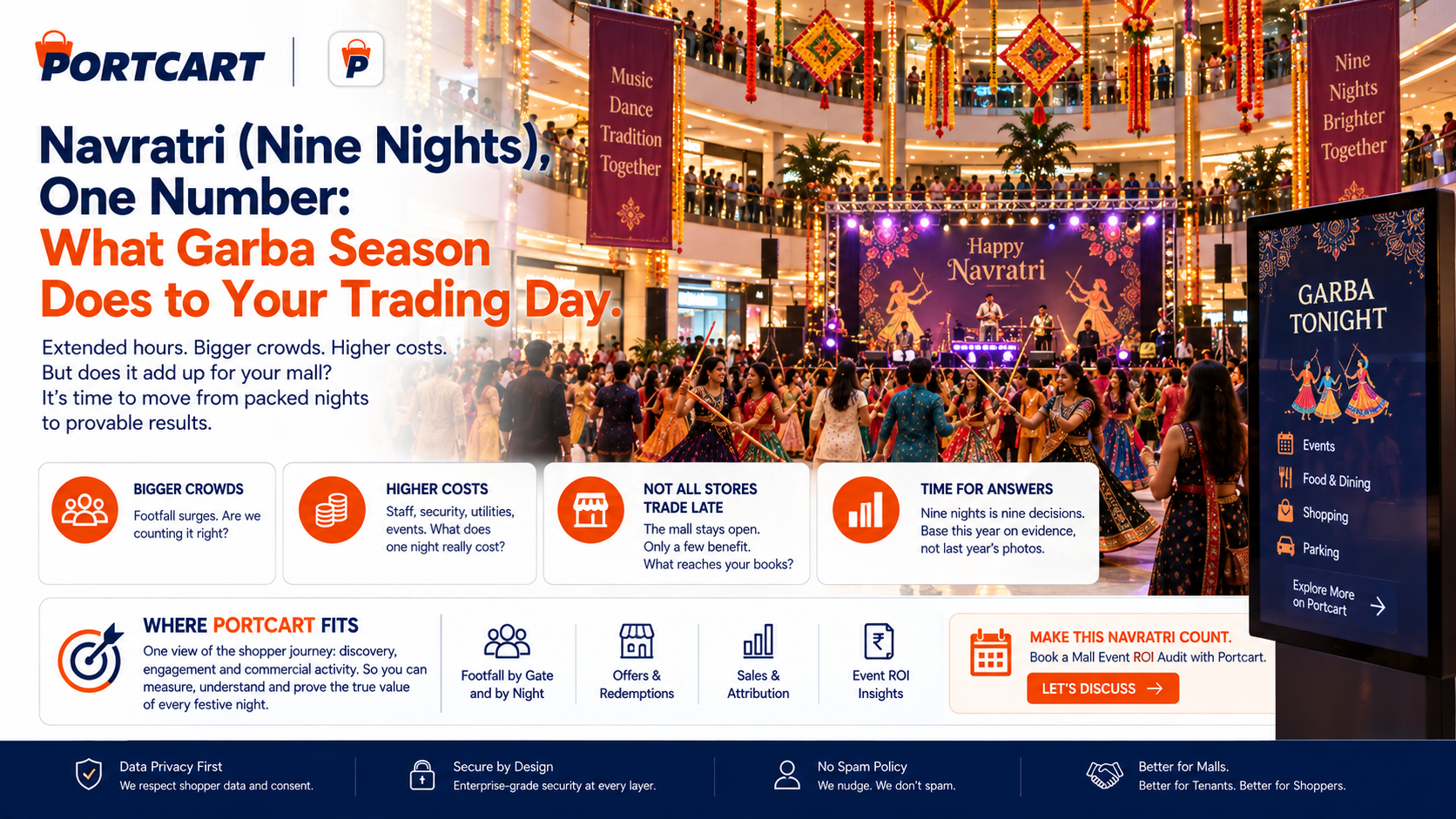
Navratri (Nine Nights), One Number: What Garba Season Does to Your Trading Day.
Navratri keeps a mall open late for nine consecutive nights, and the season is reported afterwards as crowds and photographs. Nobody computes what one night cost the mall's own books or what it brought in. The decision to run all nine is made once in September and never revisited.
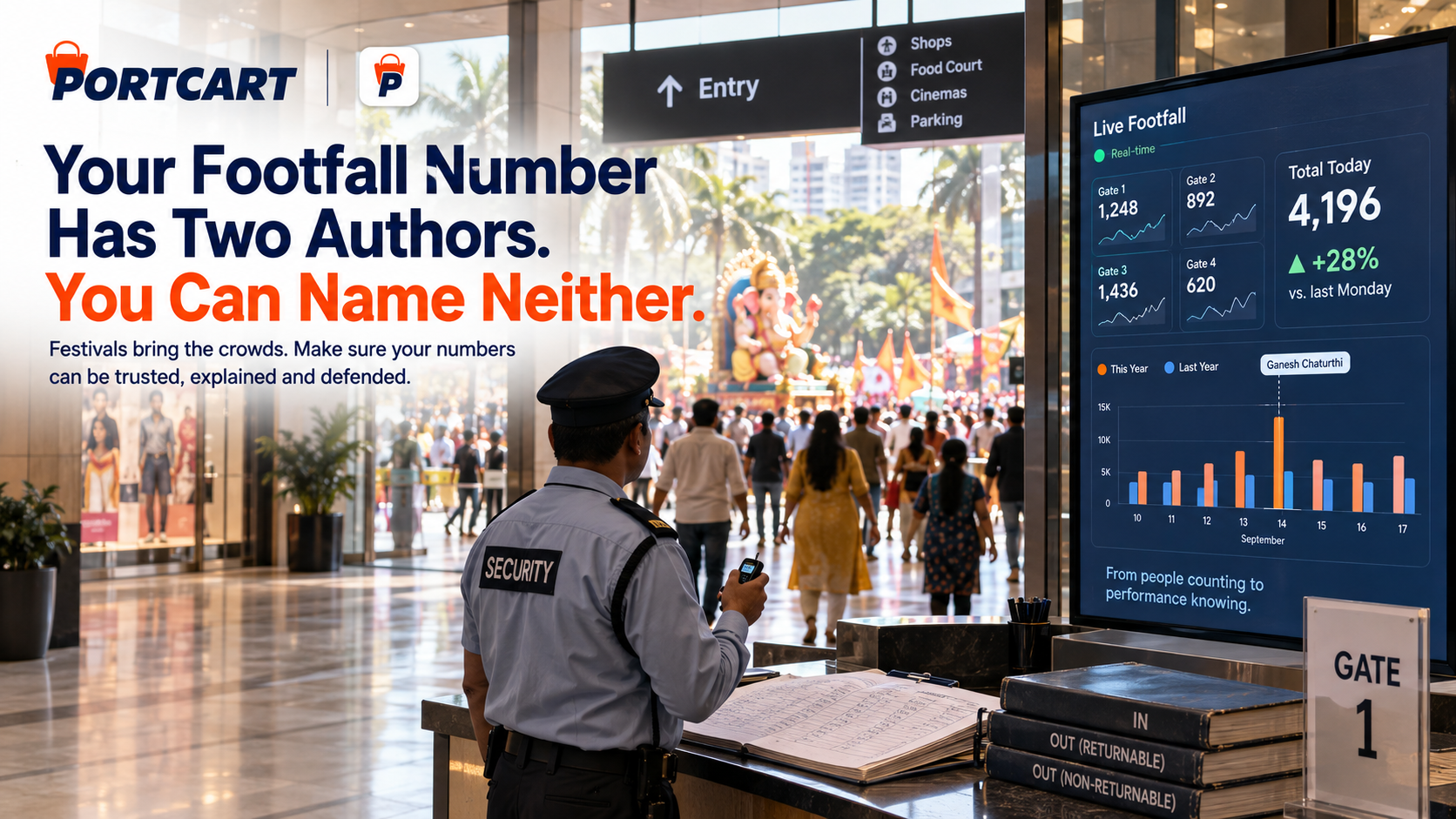
Your Footfall Number Has Two Authors. You Can Name Neither.
Ganeshotsav week produces the most quoted and most disputed footfall figures of the year. Ask who counted at Gate 3 on the peak day and who typed the number into the sheet, and most malls cannot answer either. A number with no author cannot be defended in a renewal.
QA C3 Draft
QA C3 excerpt
QA C3 Draft
QA C3 excerpt
QA C3 Draft
QA C3 excerpt
QA C3 Draft
QA C3 excerpt
QA C3 Draft
QA C3 excerpt
QA C3 Draft
QA C3 excerpt
QA C3 Draft
QA C3 excerpt
QA C3 Draft
QA C3 excerpt
QA C3 Draft
QA C3 excerpt
QA C3 Draft
QA C3 excerpt
QA C3 Draft
QA C3 excerpt
QA C3 Draft
QA C3 excerpt
QA C3 Draft
QA C3 excerpt
QA C3 Draft
QA C3 excerpt
QA C3 Draft
QA C3 excerpt
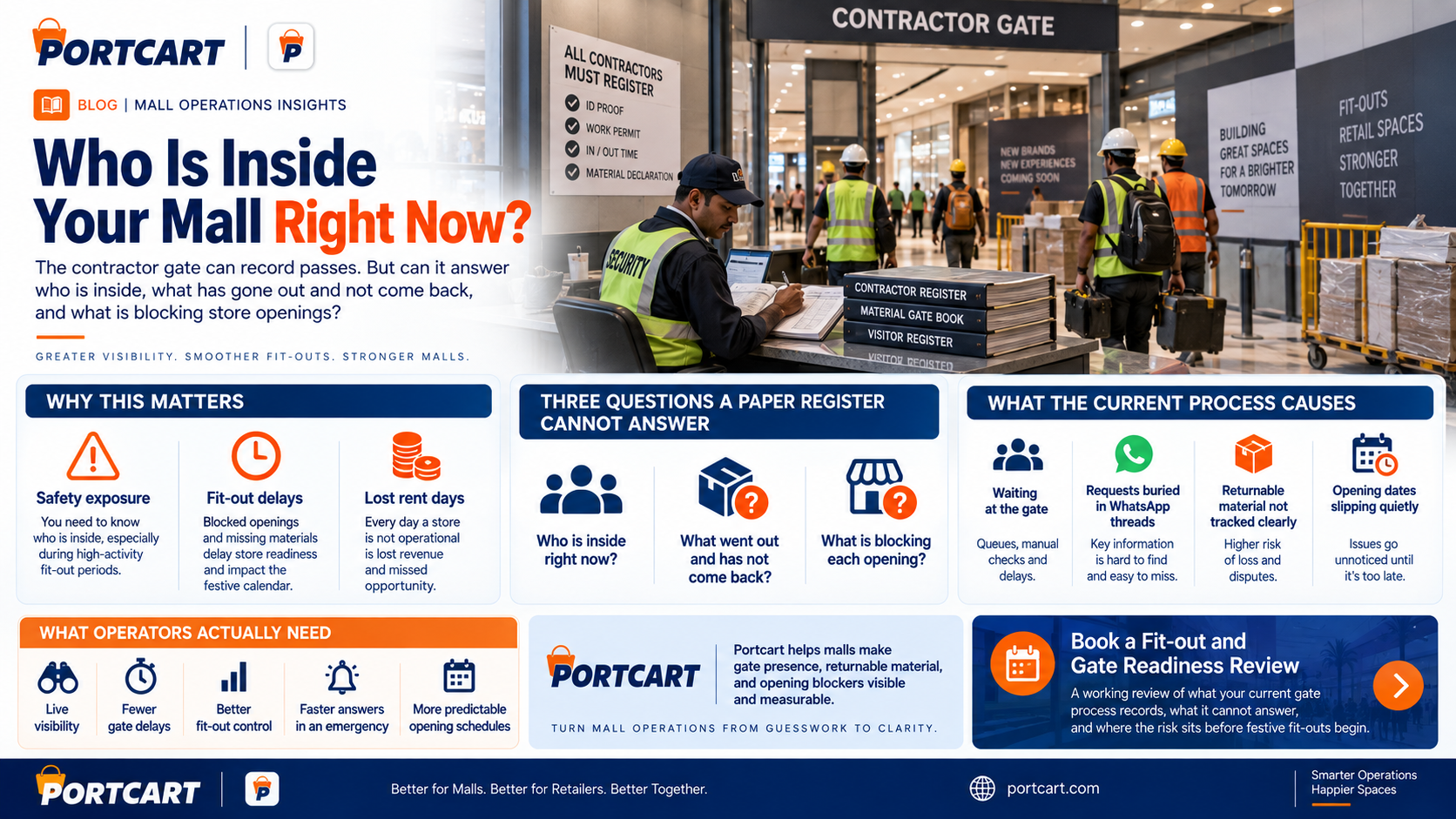
Who Is Inside Your Mall Right Now?
Several fit-outs are running at once, crews come and go daily, and the gate is a paper register. Ask the simplest safety question there is and most malls cannot answer it. The same register is why openings slip, and a slipped opening is rent that has not started.
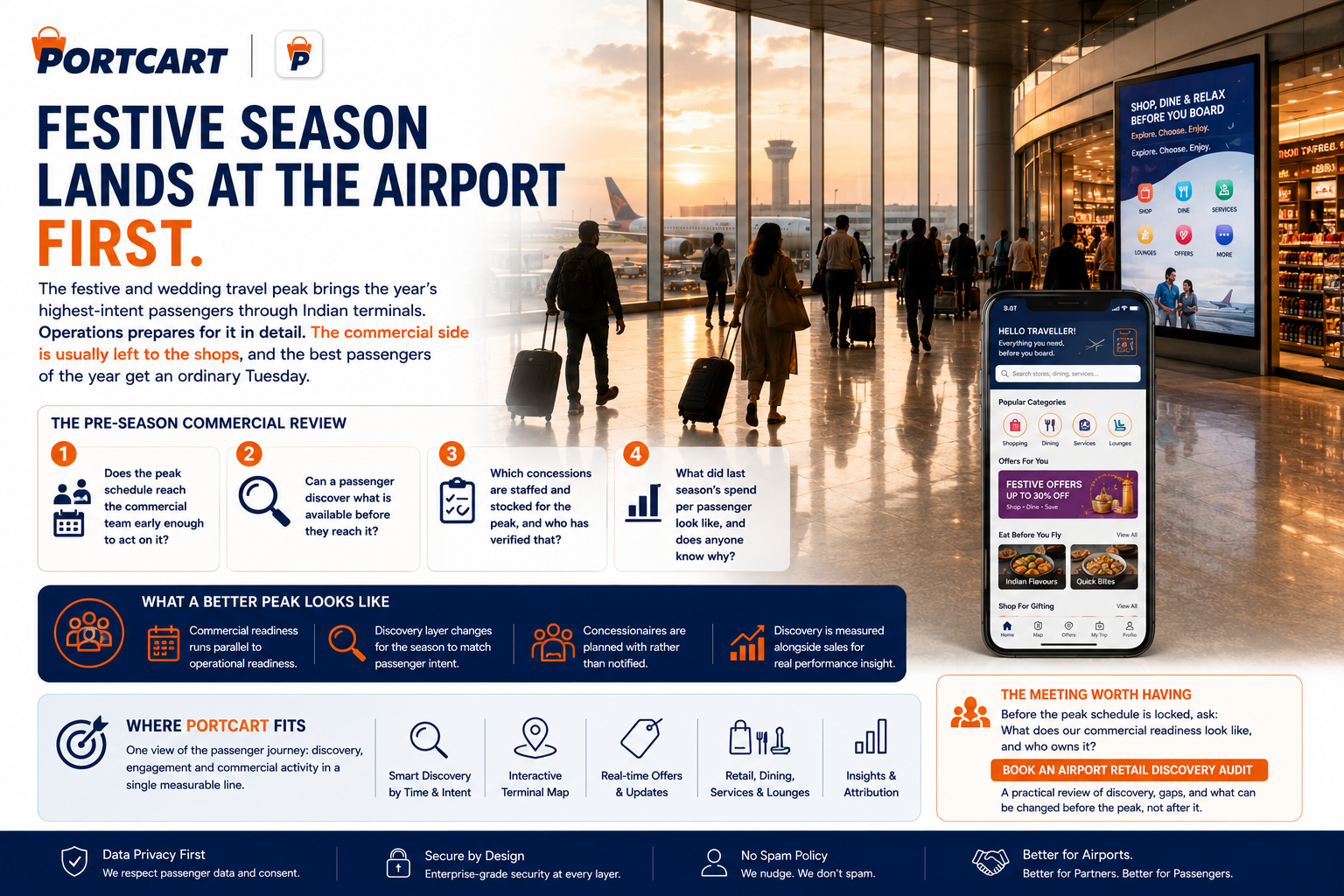
Festive Season Lands at the Airport First.
The festive and wedding travel peak brings the year's highest-intent passengers through Indian terminals. Operations prepares for it in detail. The commercial side is usually left to the shops, and the best passengers of the year get an ordinary Tuesday.
The Diwali Quarter Is Decided This Month.
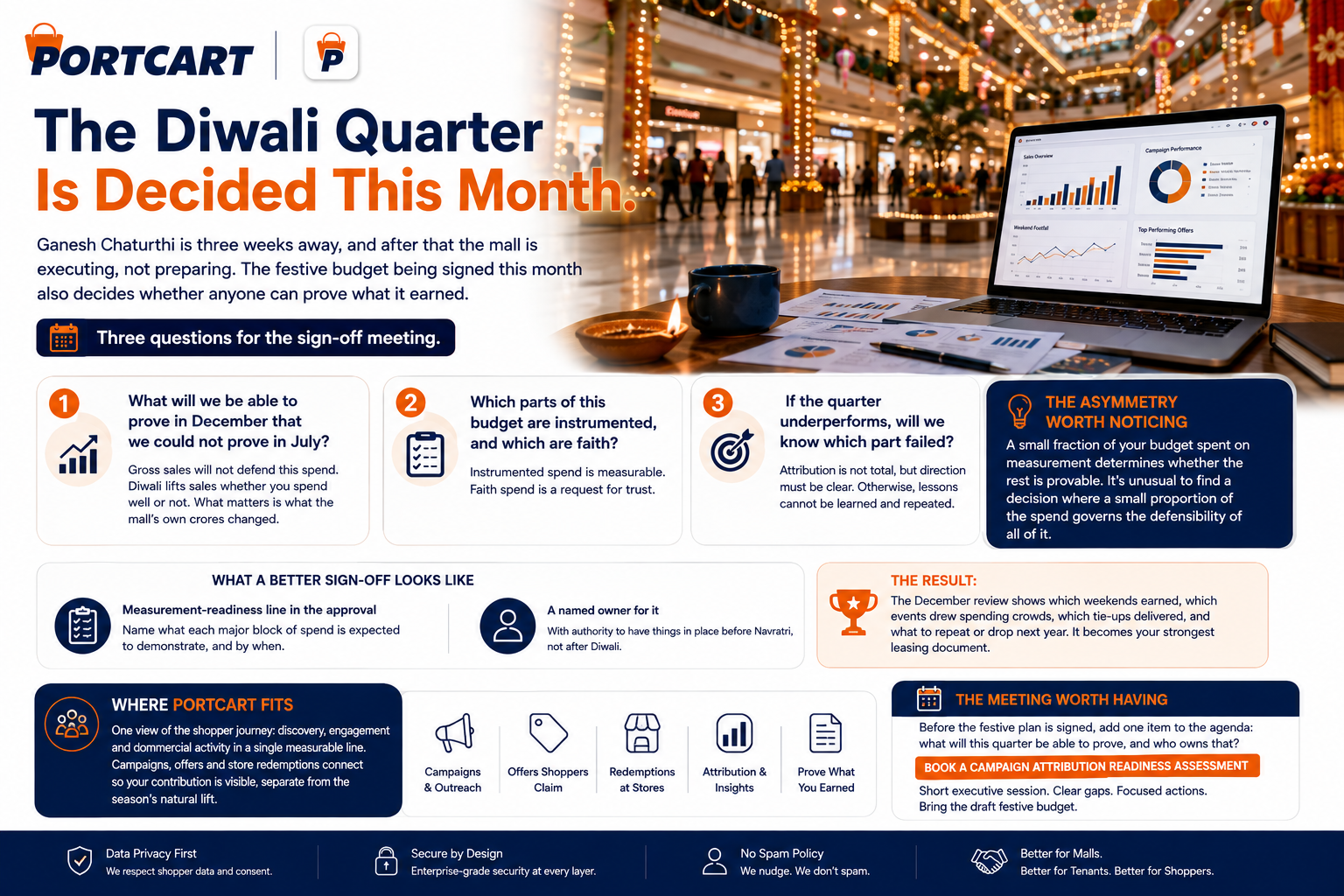
Ganesh Chaturthi is three weeks away, and after that the mall is executing, not preparing. The festive budget being signed this month also decides whether anyone can prove what it earned. Three questions for the sign-off meeting.
A Gift Voucher Is a Scheduled Second Visit. Most Malls Treat It Like Paper.
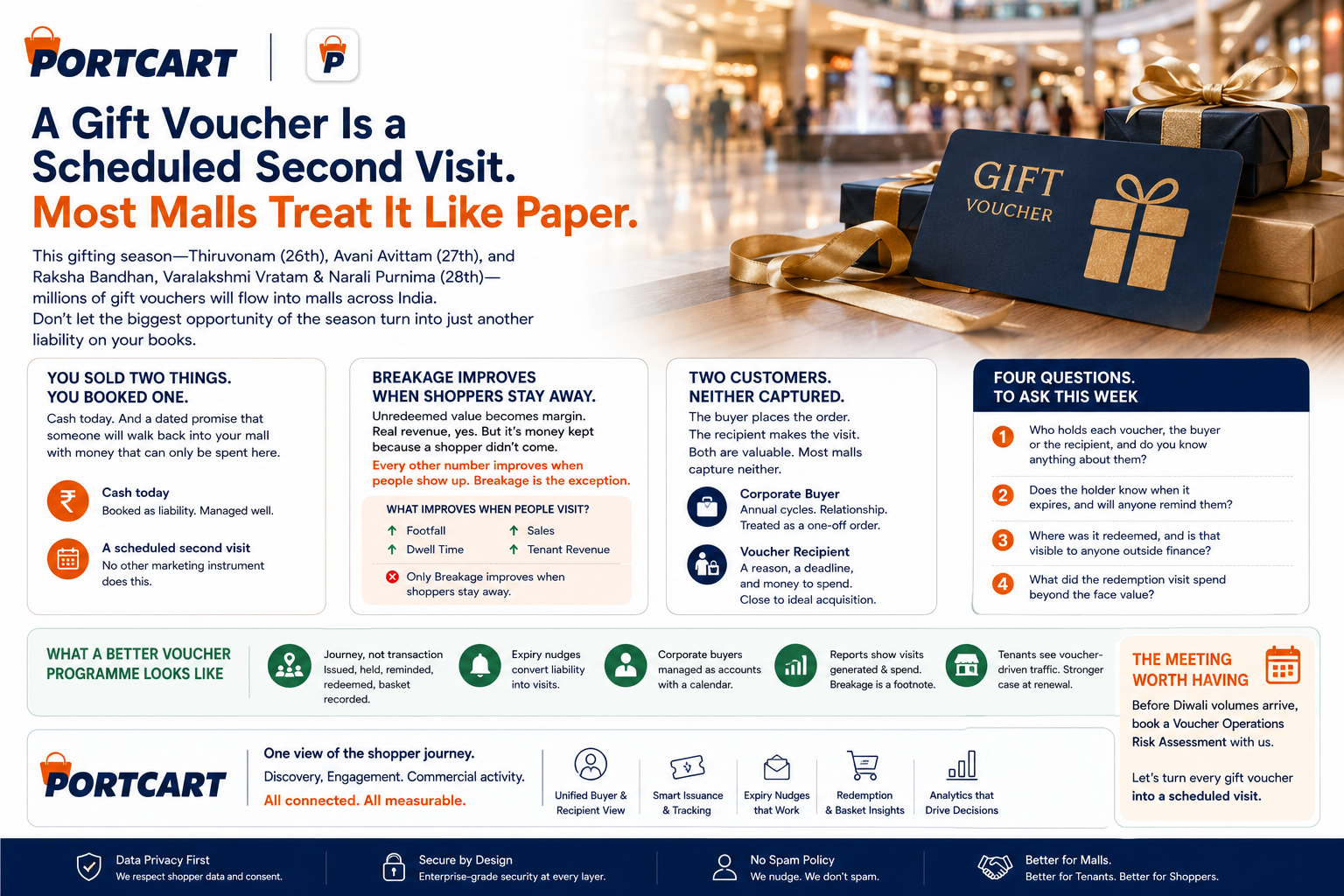
Onam, Avani Avittam and Rakhi land inside three days, and gift-card volume follows. Every voucher you sell is a dated promise that someone will walk back into your mall. Most malls record the cash and lose the visit.
Your Biggest Crowd Between Now and Diwali Arrives This Saturday.
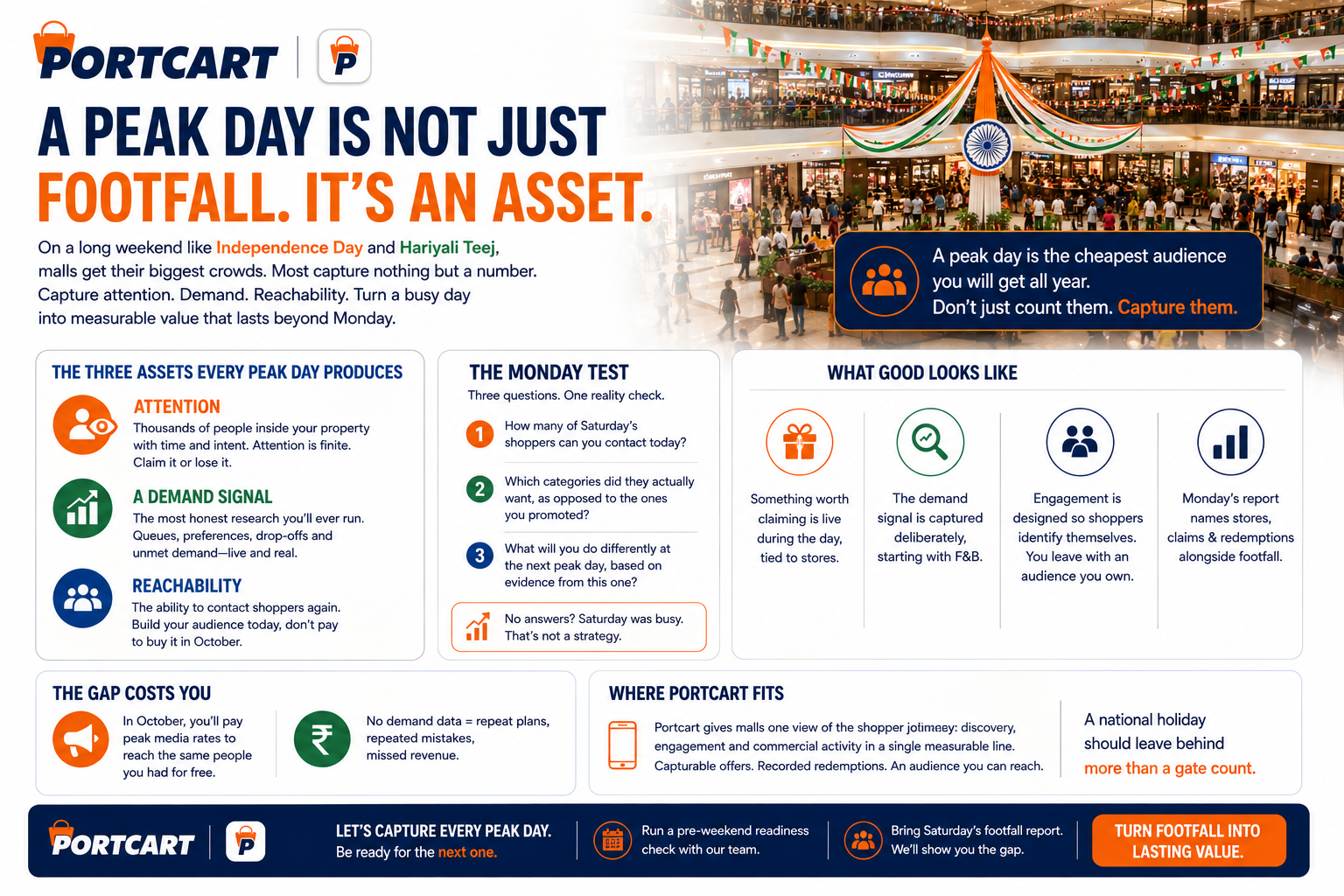
Independence Day falls on a Saturday this year, and Teej lands the same day. Your mall will be full. Operations is ready. On Monday you will hold a footfall number and nothing else, then pay festive rates in October to reach the same people.

The Sale Season Is Over. Can Anyone Say What It Earned?
The end-of-season sale is done, the July report shows sales up, and the festive budget meeting is weeks away. Three leaks make that July number soft, and the report cannot size any of them. What to check before the biggest ask of the year.
The Invisible Terminal: Why Airport Shops Lose Passengers They Never See
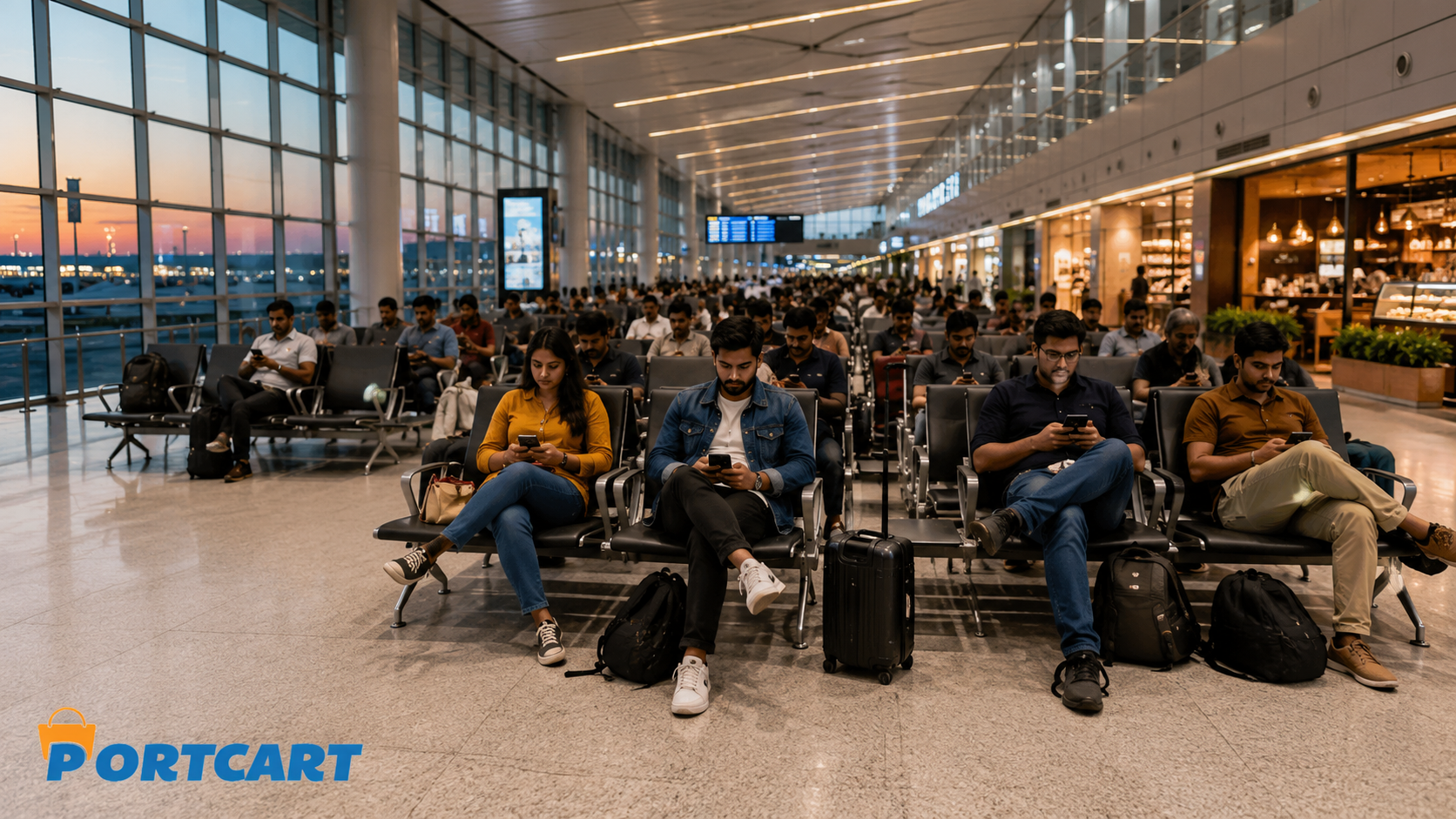
A passenger with 75 minutes after security has money to spend and time to kill, and no idea the store they would have bought from is a two-minute walk away. That is non-aero revenue walking past the shop. Why terminals stay invisible to their own passengers, and what it costs.
Tenant Renewal Risk Starts Long Before the Renewal Meeting
The tenant who blindsides you at the renewal table was not a surprise. The dissatisfaction built for two years while the mall watched its own footfall instead of the tenant's experience. Six warning signs a store is quietly heading for the exit, and how to see them while you still have leverage.

Why Footfall Alone Is No Longer a Defensible Boardroom Metric
Footfall is the one slide everyone in the room nods at. Then sales come in flat, and the gap between bodies and business is the whole conversation. Why a headcount cannot defend capital, and what belongs under the footfall number in the board pack.
Why Most Mall Loyalty Programmes Become Discount Databases
Two lakh members. Points issued up. Redemptions up. Then the CEO asks whether any of it made people visit more or spend more, and the room goes quiet. Why most mall loyalty programmes quietly become discount databases, and how to tell if yours has.
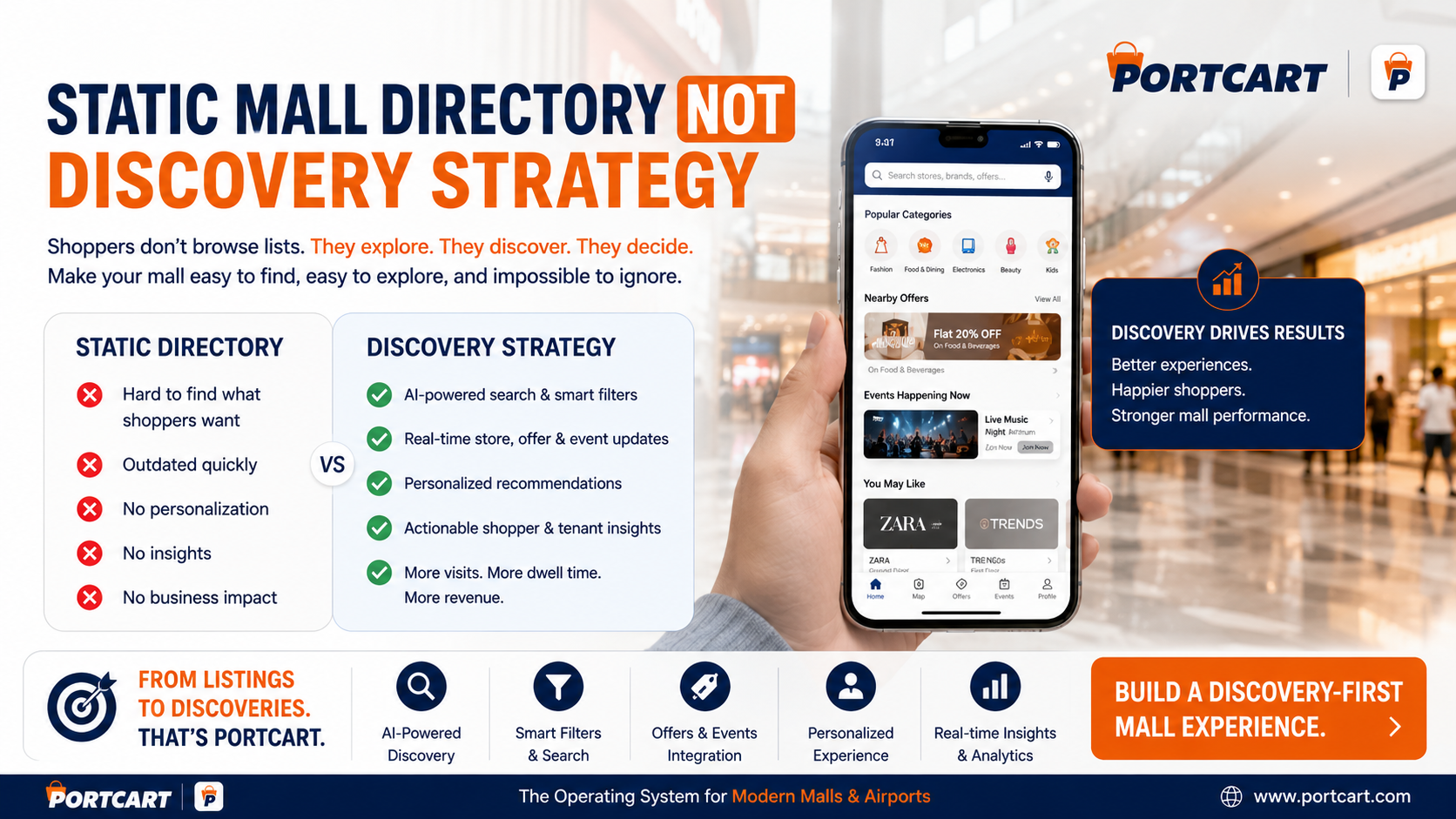
A Static Directory Is Not a Shopper-Discovery Strategy
Search your top 20 tenants right now. Count how many results your mall owns. That number is your discovery strategy, and for most Indian malls it is close to zero. Why the tenant list fails at the moment of intent, and what a directory that sells looks like.
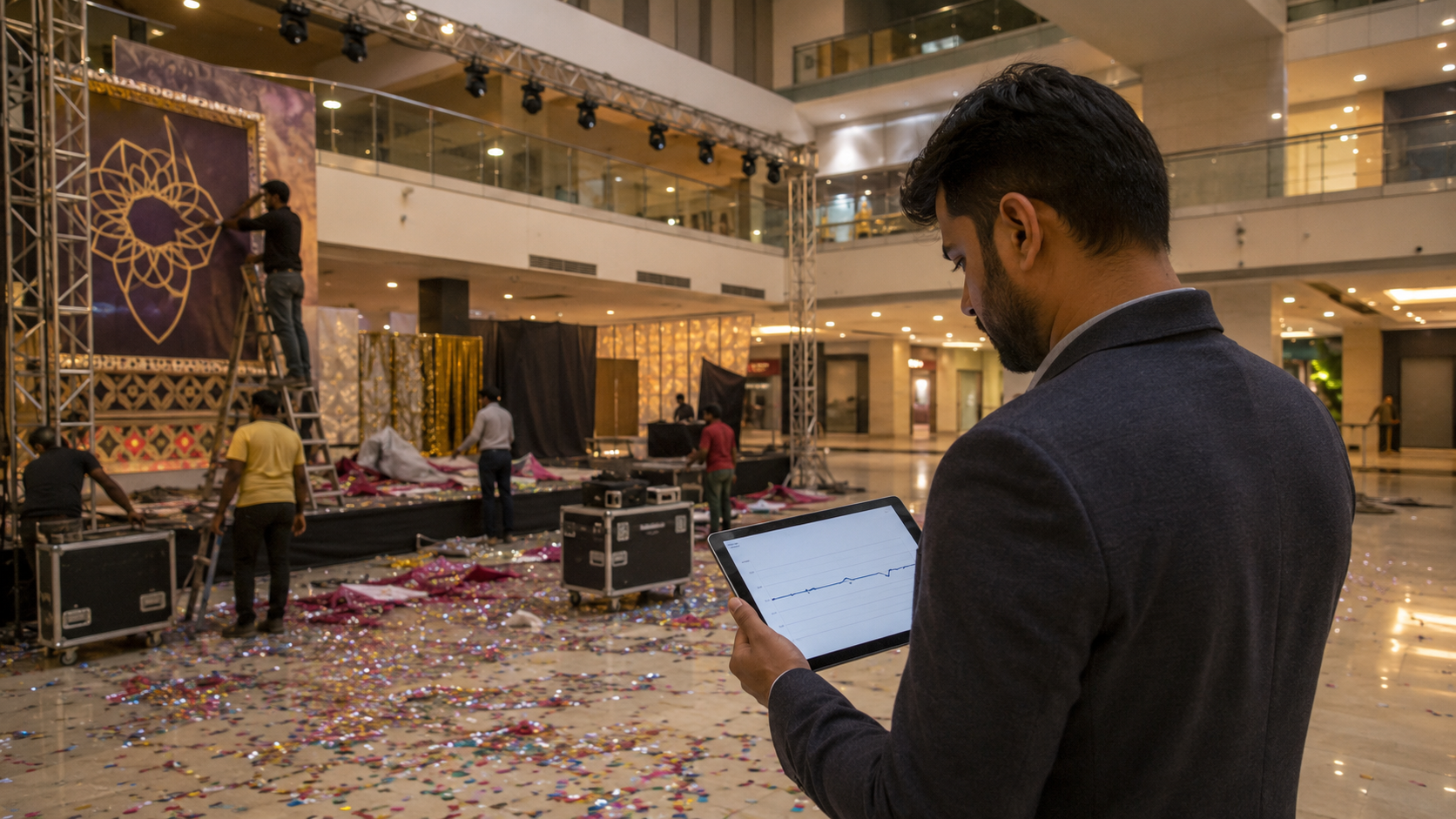
Your Mall Event Was Crowded. That Does Not Mean It Worked.
The atrium was packed, the deck said footfall was up, and the CFO still asked which stores made money. Why event reports built on presence cannot defend a budget, and what Monday's report should say instead.
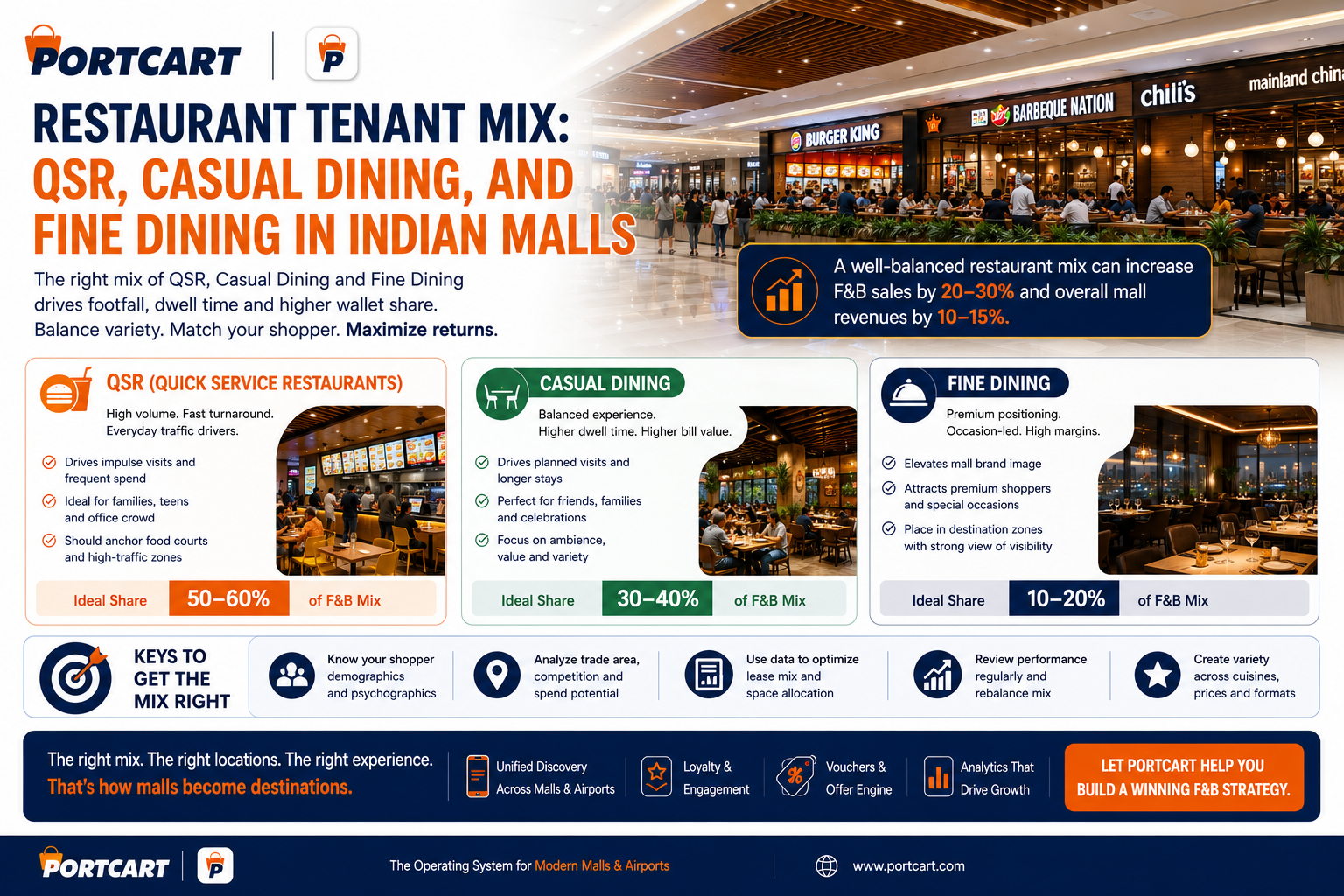
Restaurant Tenant Mix: QSR, Casual Dining, and Fine Dining in Indian Malls
Get the restaurant mix wrong and a mall has five burger joints and nowhere for a family dinner. The F&B tenant mix is a footfall design decision, not a leasing afterthought.
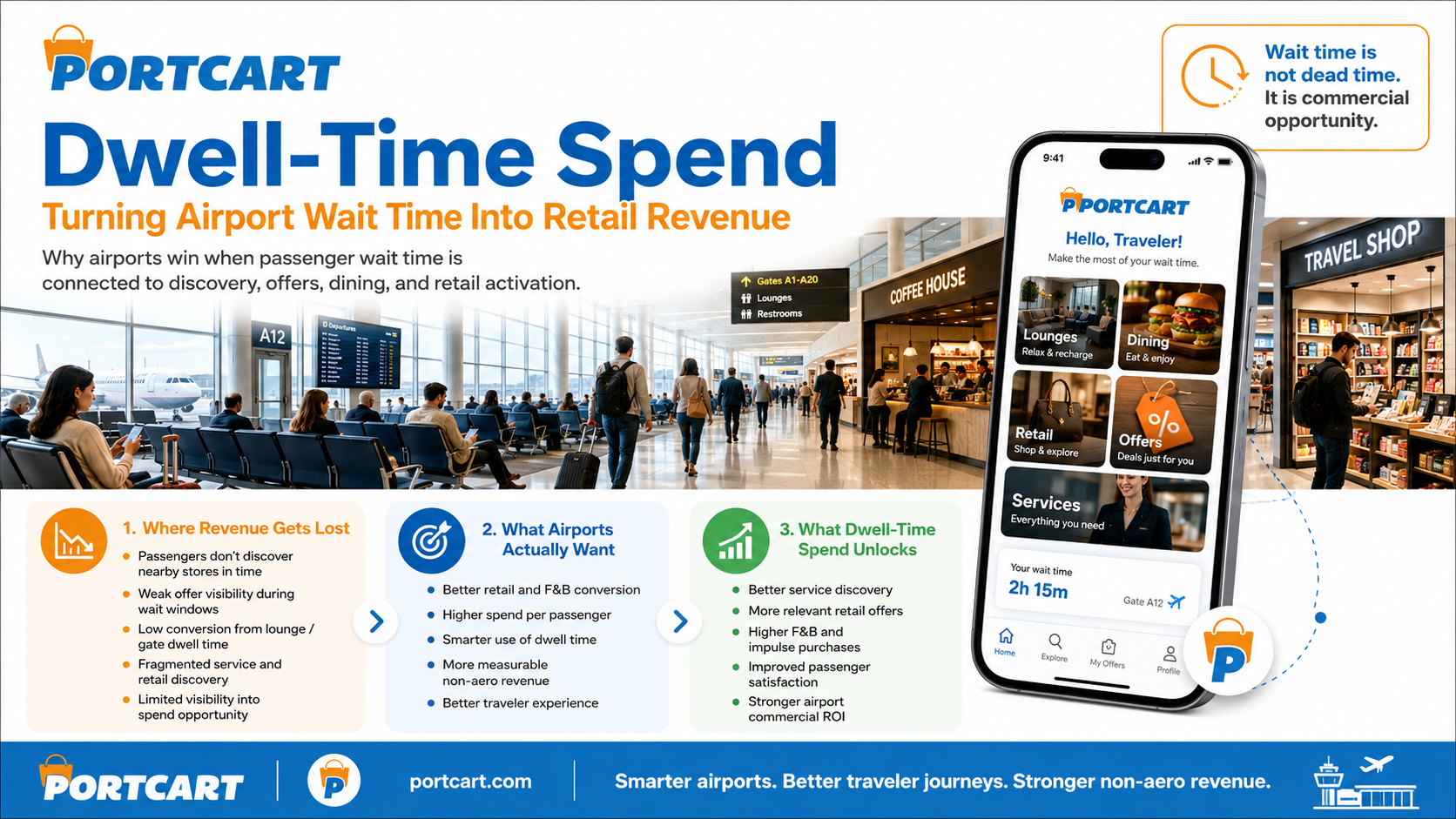
Dwell-Time Spend: Turning Airport Wait Time Into Retail Revenue
An airport is paid in minutes. The longer a traveller is comfortably inside after security, the more they spend. Most terminals measure dwell time but never design for converting it.
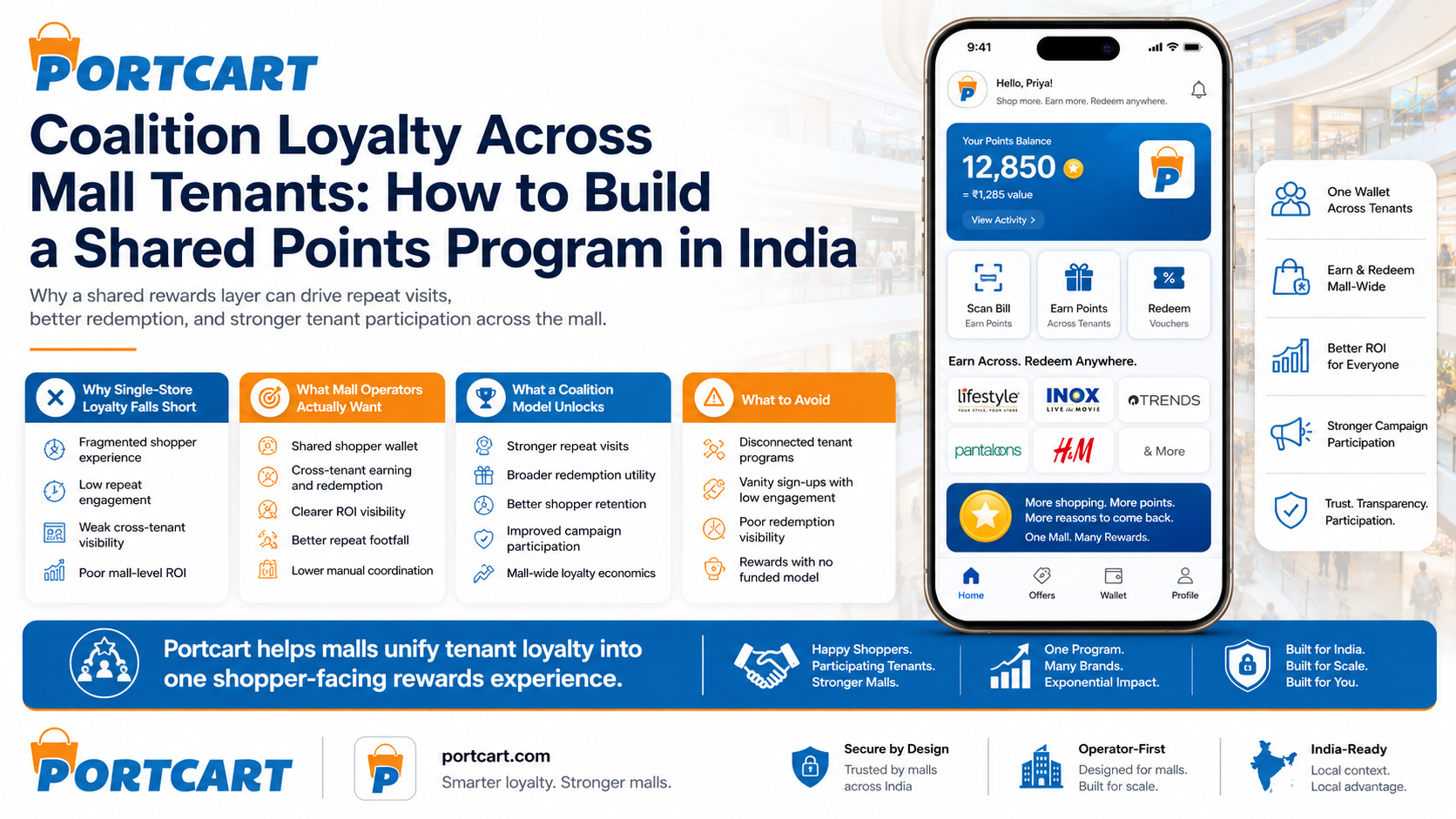
Coalition Loyalty Across Mall Tenants: How to Build a Shared Points Program in India
A shopper carries a points card for one brand, a wallet for another, and a forgotten SMS from the mall, and none of them talk. Coalition loyalty is the mall owning one programme the whole visit earns into.
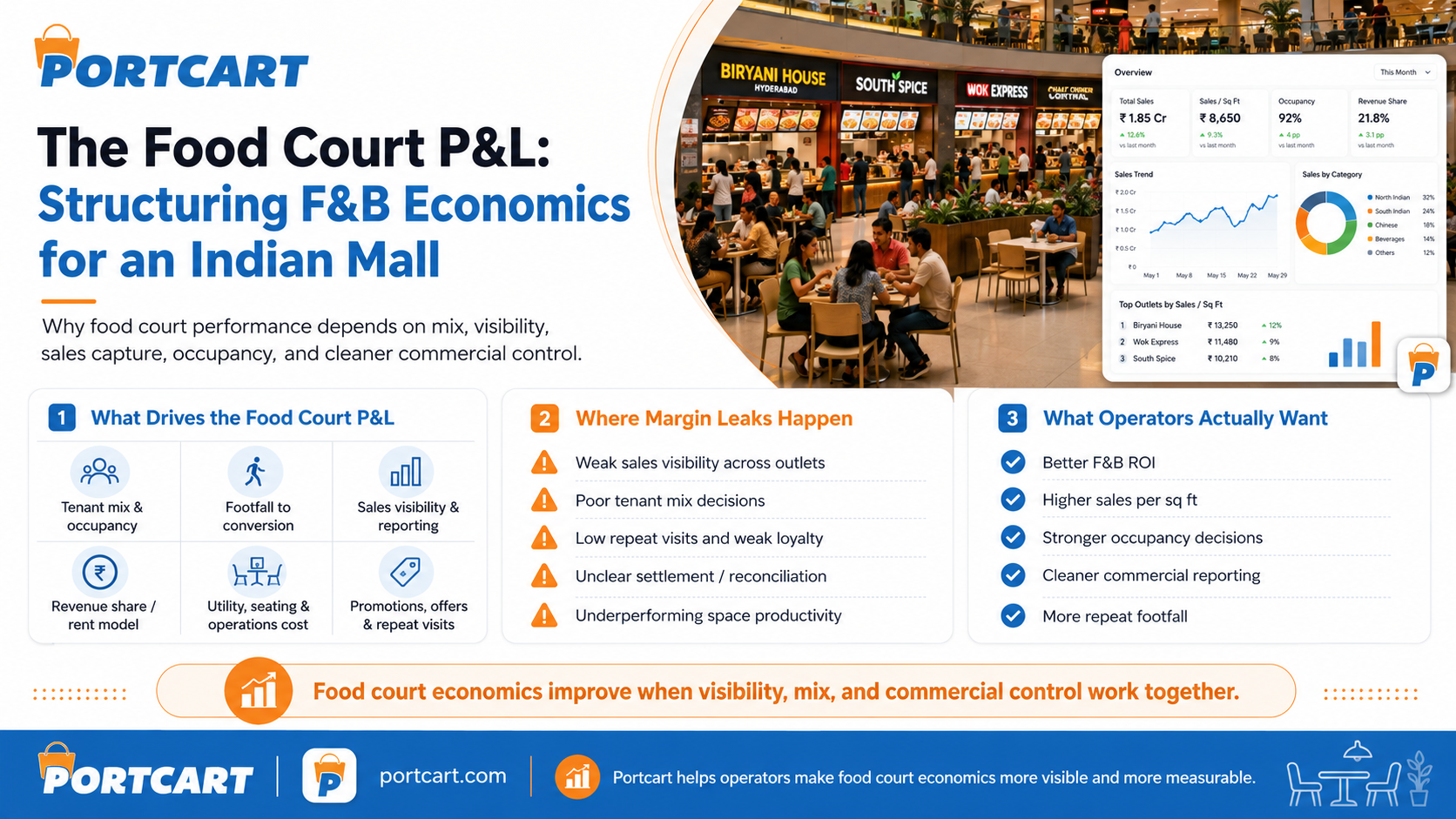
The Food Court P&L: Structuring F&B Economics for an Indian Mall
A food court is the busiest part of most Indian malls and, per square foot of rent, often the least profitable. That paradox is why food-court economics get misread. It is a footfall engine, not a rent play.
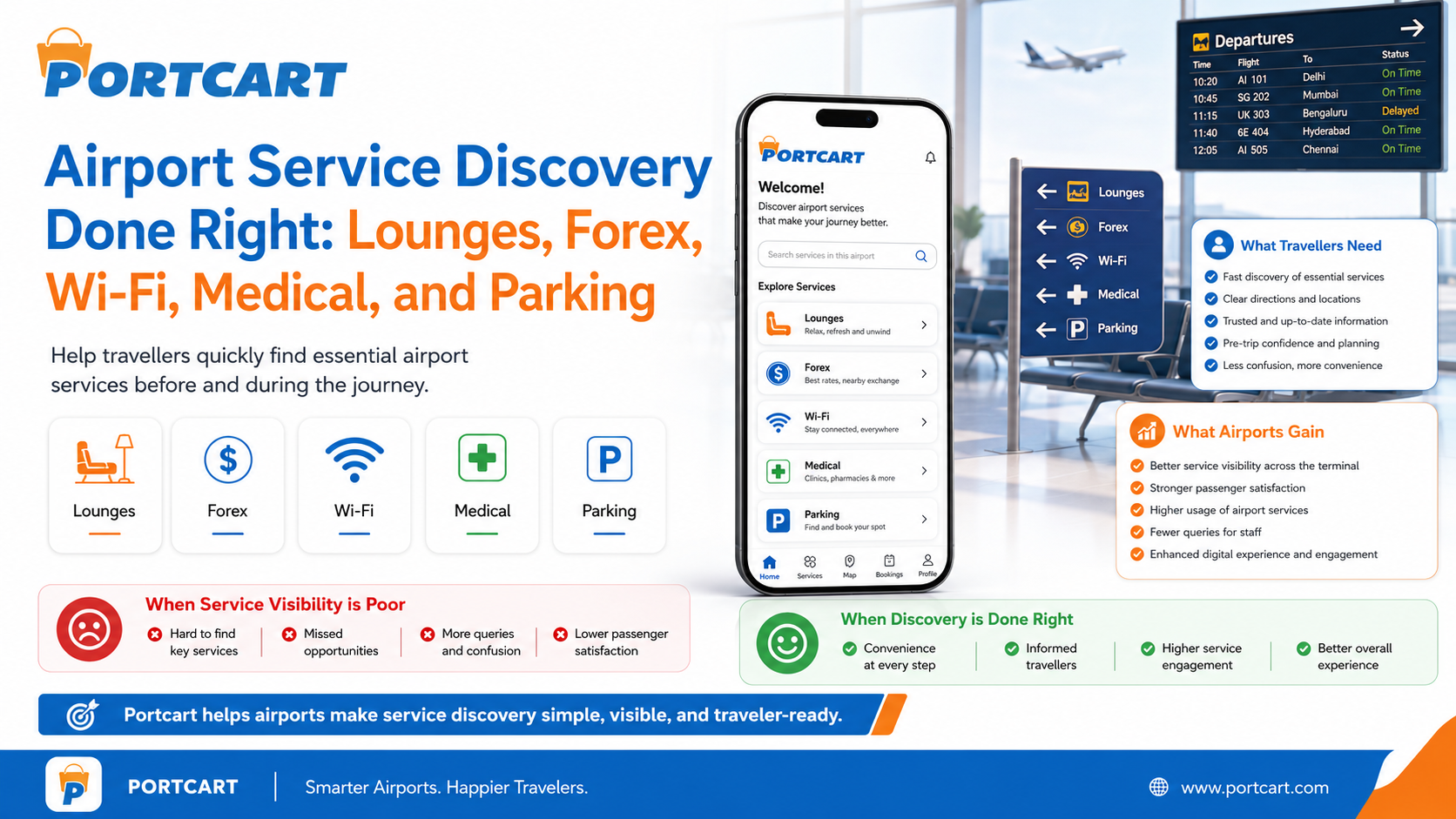
Airport Service Discovery Done Right: Lounges, Forex, Wi-Fi, Medical, and Parking
Travellers spend an hour in the terminal and never find the lounge, the pharmacy, or the cheaper forex counter. Service discovery is the quiet revenue lever most Indian airports leave on the table.
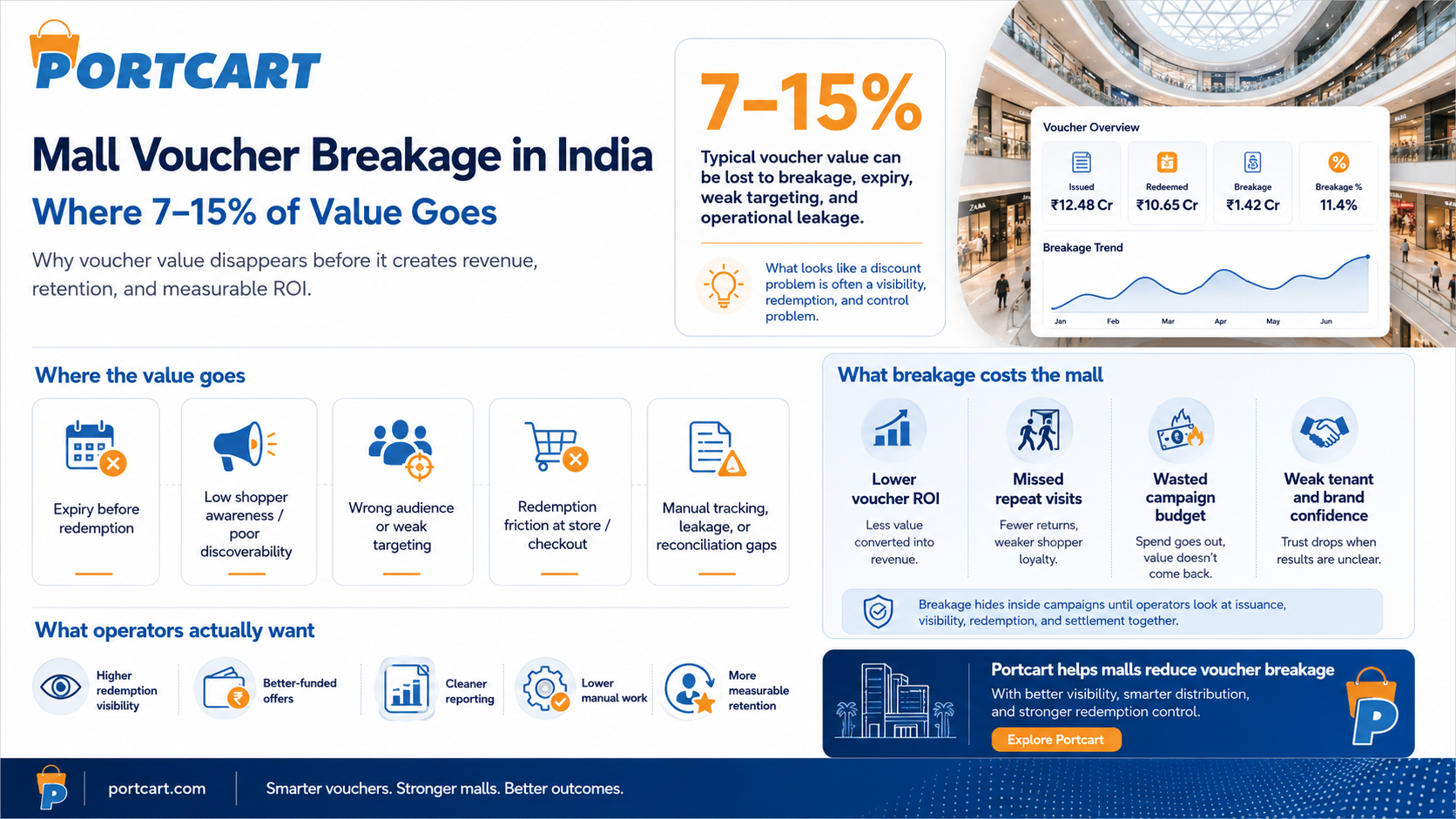
Mall Voucher Breakage in India: Where 7-15% of Value Goes
Most Indian mall voucher programmes lose 7 to 15 percent of issued value annually. The cause is not shopper forgetfulness. It is the reconciliation gap. Here is how to close it.
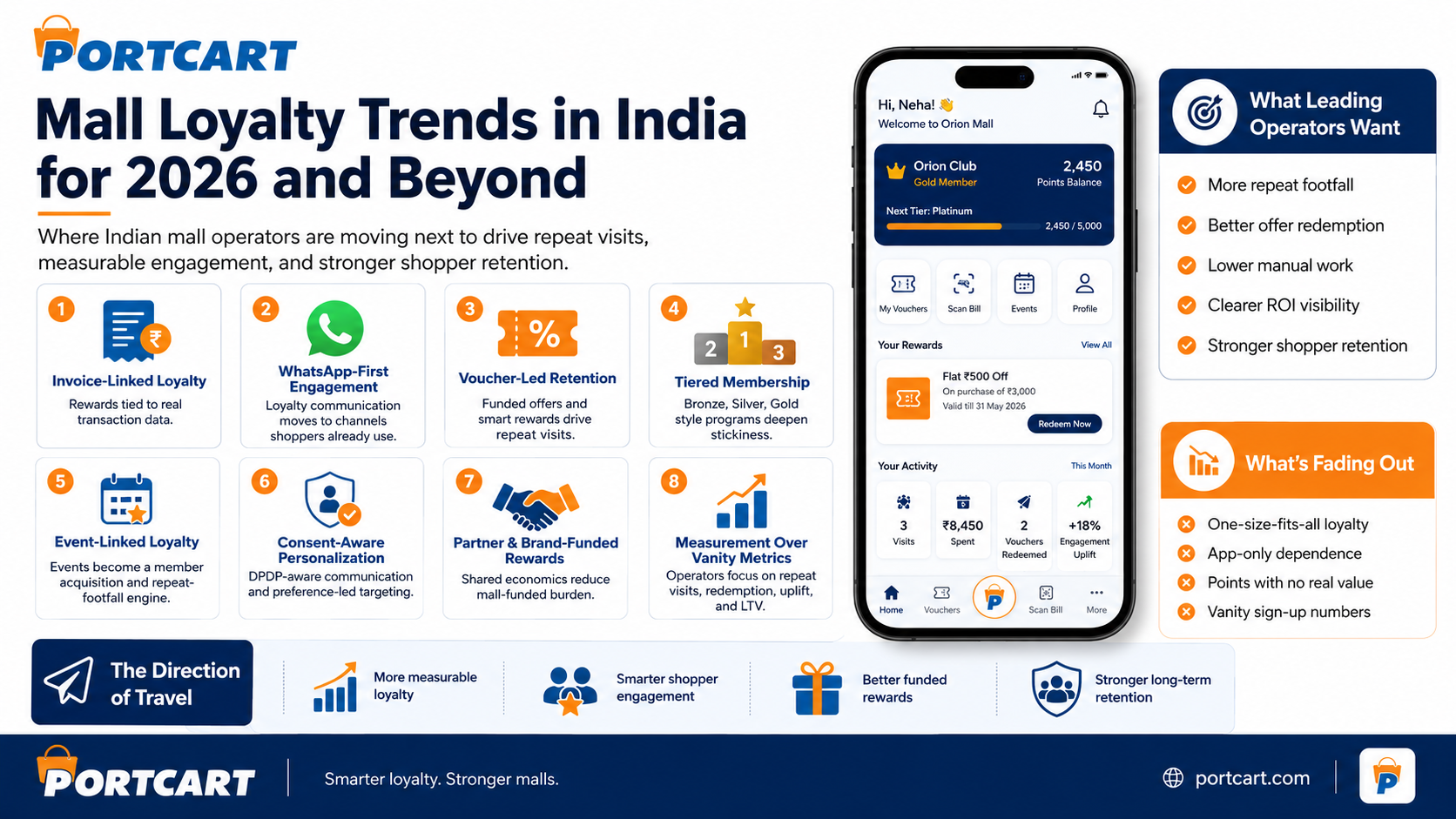
Mall Loyalty Trends in India for 2026 and Beyond
Indian mall loyalty in 2026 is at an inflection point. Subscription loyalty is emerging, AI personalisation is in early production, DPDP compliance is rewriting consent flows. A trend report for operators.
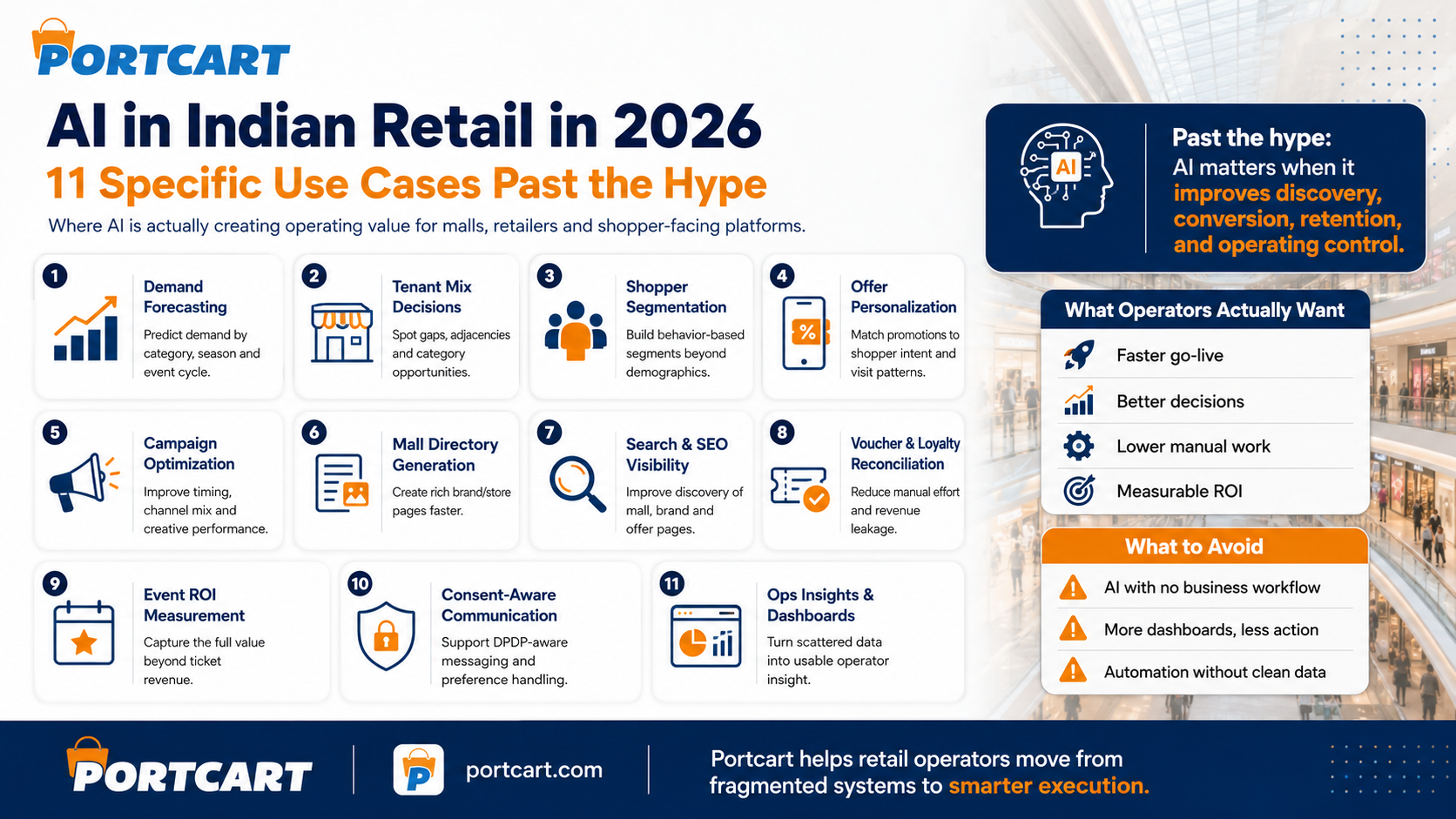
AI in Indian Retail in 2026: 11 Specific Use Cases Past the Hype
Eleven AI use cases that genuinely help Indian mall teams in 2026, the practical catch in each, and five where the hype runs ahead of reality. AI assists, people decide.

Tier-3 Cities and Indian Retail in 2026: What the Tech Stack Should Look Like
Tier-3 cities (population 50,000 to 500,000) are now driving net-new mall pipeline in India. A specific tech stack guide that does not just downsize the metro template.

How to Get Mall Pages Indexed on Google in 2026: A Technical SEO Walkthrough
Indian mall websites consistently under-perform on Google search. The reasons are technical and fixable. A 90-minute SEO audit guide.

Shopper Segmentation for Indian Malls: 7 Useful Segments Beyond Demographics
Age, gender, and city are the easy segments but they do not drive operational decisions. Seven behavioural segments that actually change what malls do.
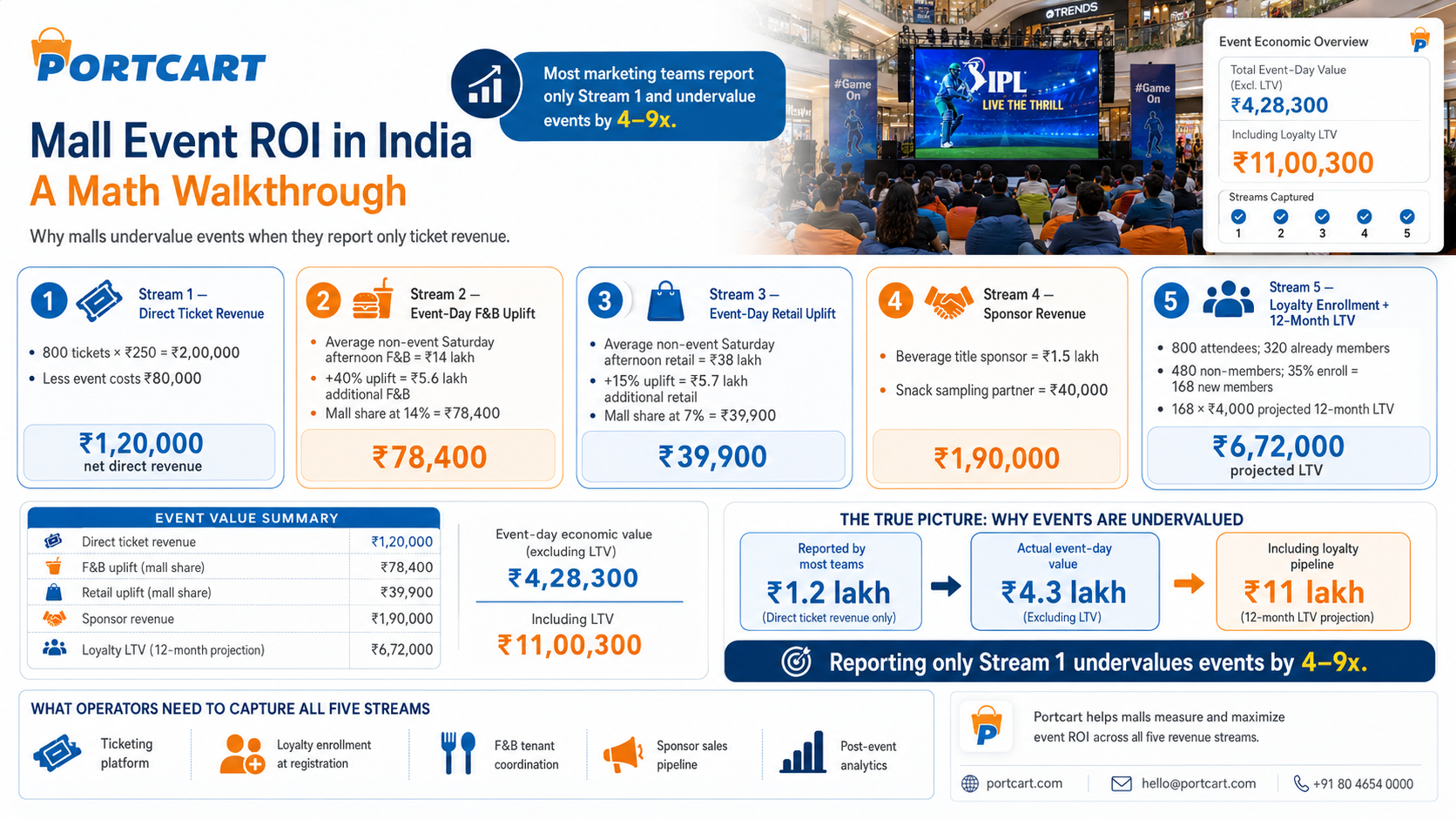
Mall Event ROI in India: A Math Walkthrough
Direct ticket revenue is the headline number for a mall event. The real economics are the indirect revenue, sponsor pipeline, and loyalty enrollment lift. The full math walkthrough.
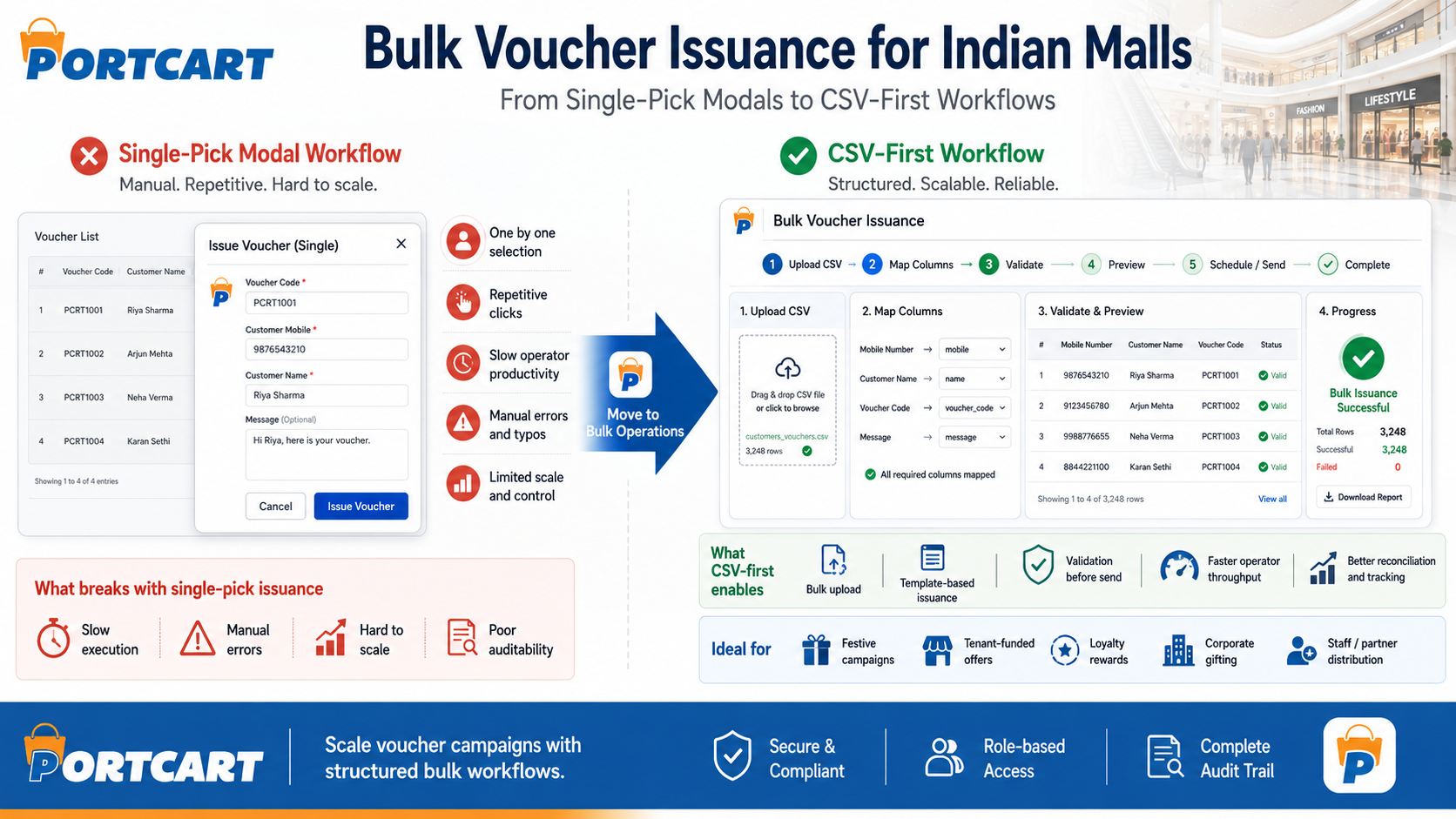
Bulk Voucher Issuance for Indian Malls: From Single-Pick Modals to CSV-First Workflows
A mall HR team issuing 800 vouchers to staff for Diwali should not click 800 single-pick modals. The bulk-issuance workflow pattern that scales without sacrificing audit discipline.
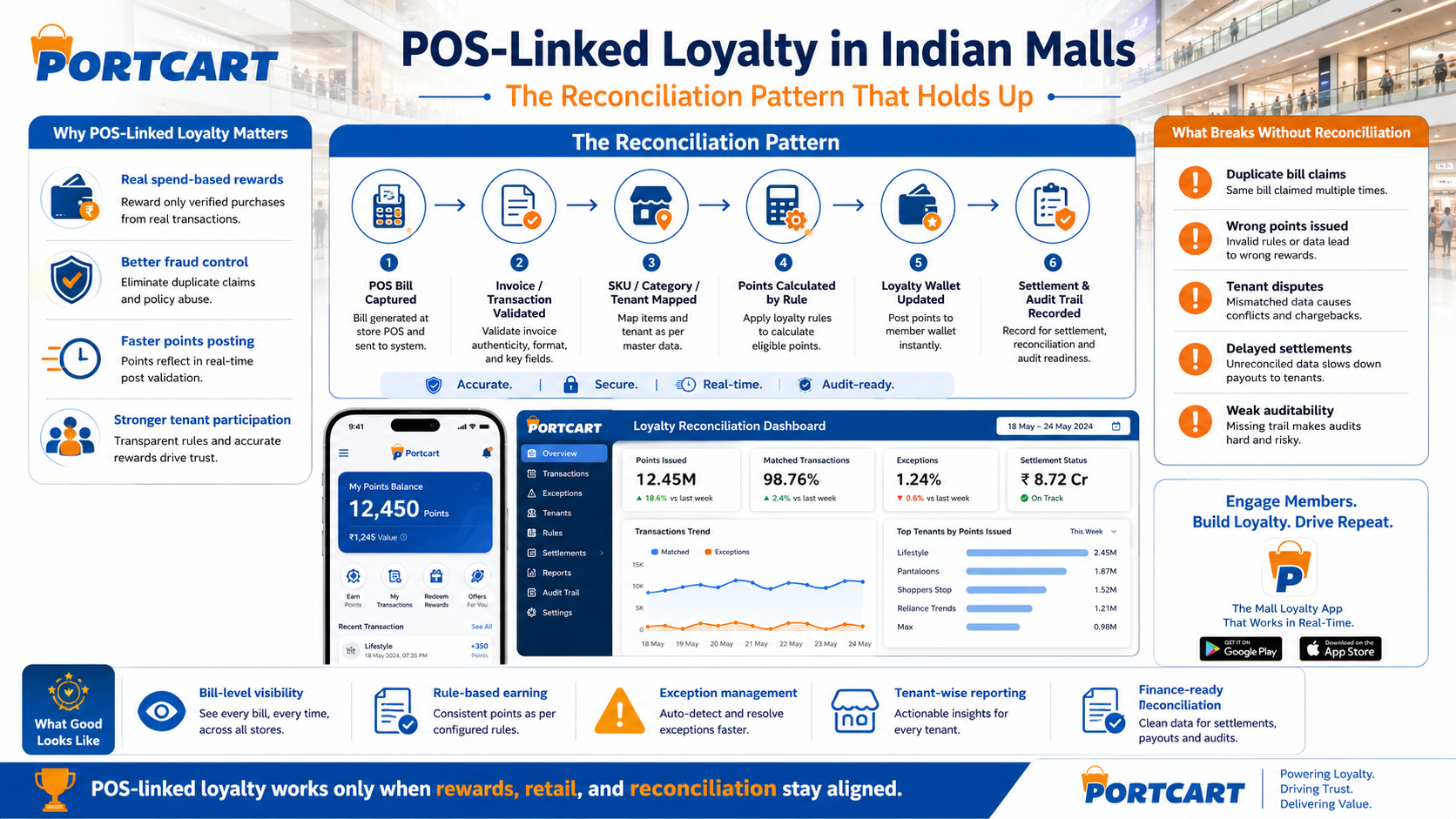
POS-Linked Loyalty in Indian Malls: The Reconciliation Pattern That Holds Up
Direct POS integration sounds clean. In practice it generates point disputes between mall and tenant brand within the first 90 days unless the reconciliation pattern is right. Here is the pattern.
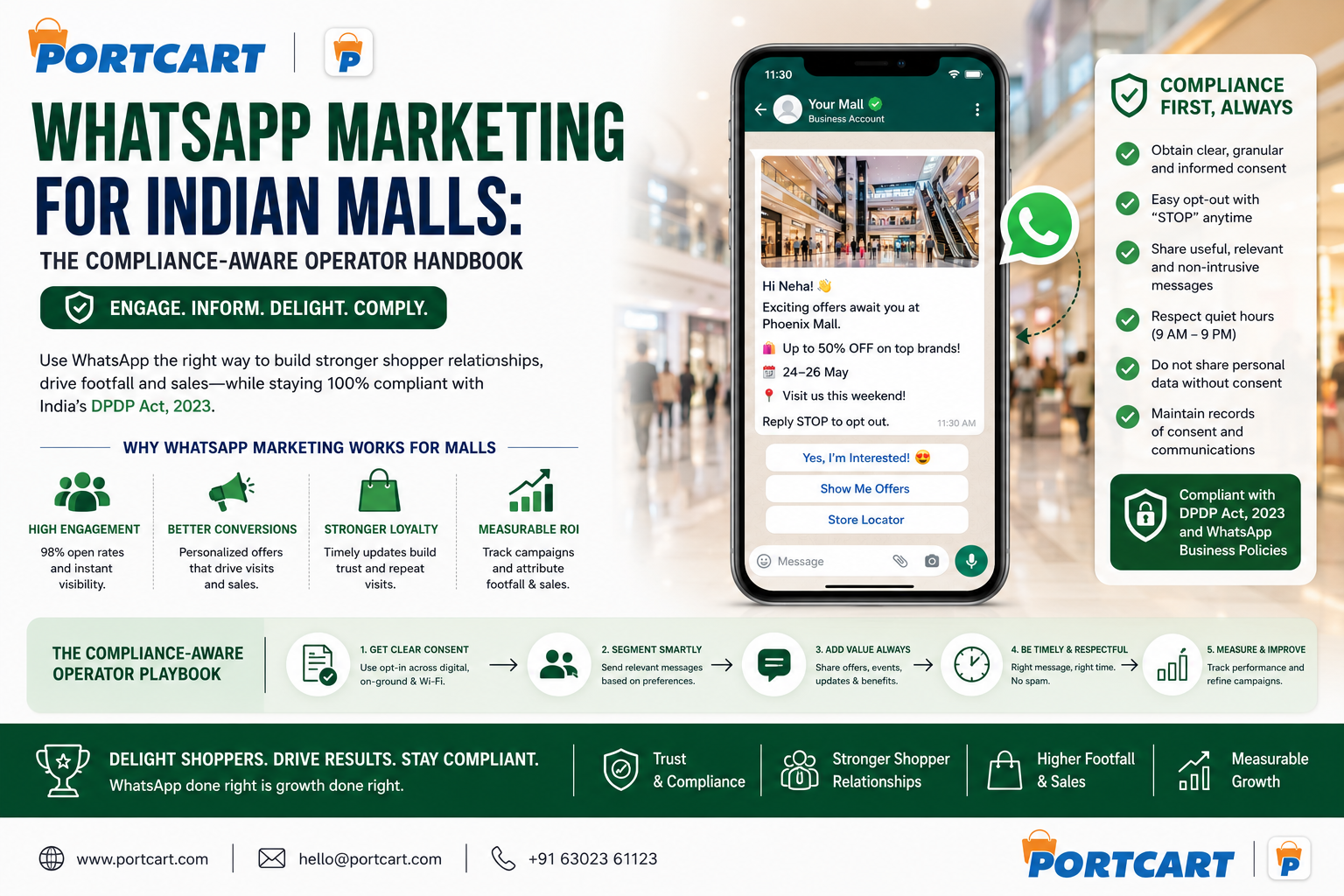
WhatsApp Marketing for Indian Malls: The Compliance-Aware Operator Handbook
WhatsApp is the highest-ROI marketing channel for Indian malls in 2026. It is also the channel most likely to break DPDP and Meta business policy at the same time. How to do it right.
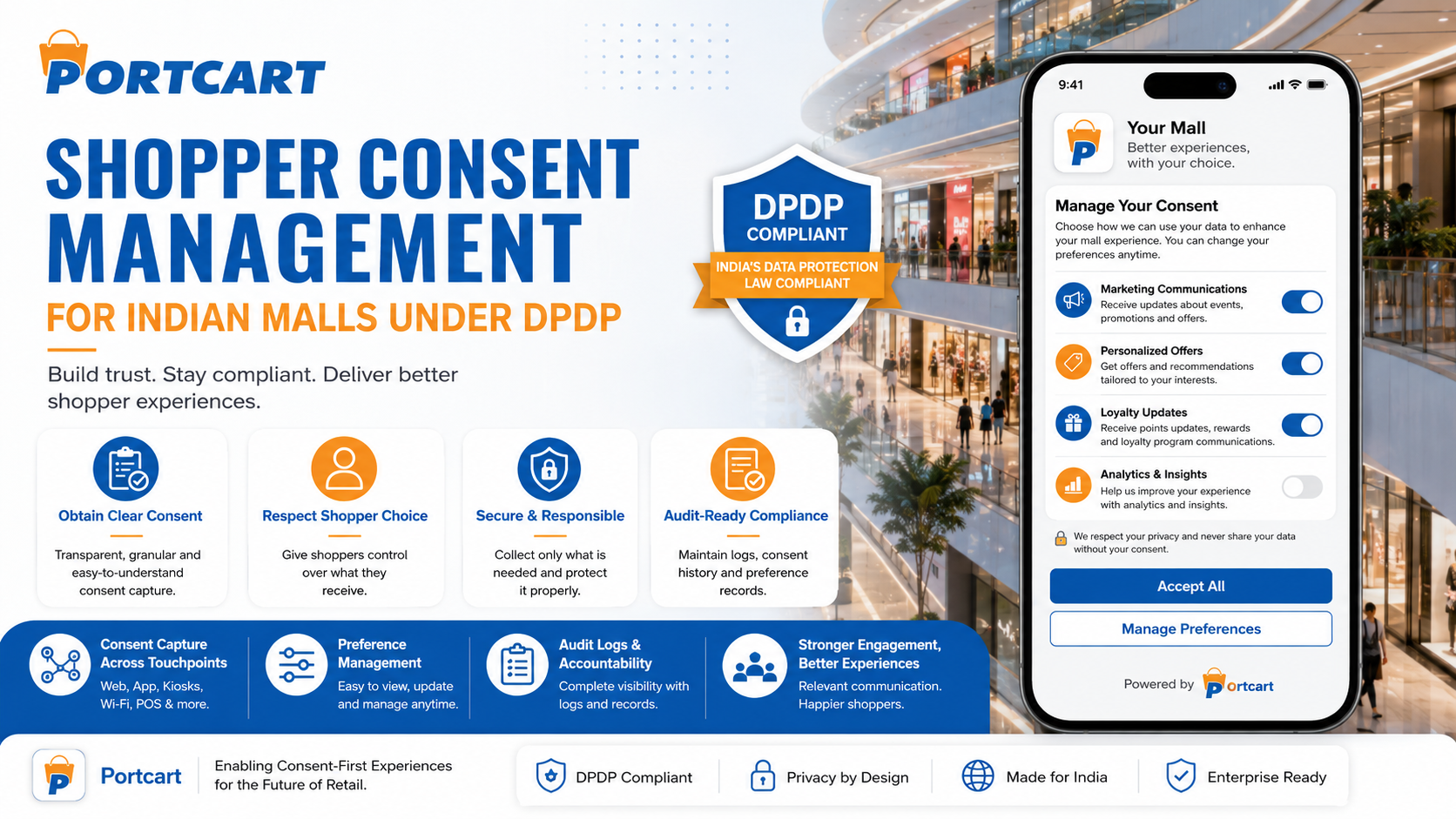
Shopper Consent Management for Indian Malls Under DPDP
DPDP requires specific, granular, withdrawable consent. Most Indian malls run consent as a single tickbox at loyalty enrollment. The proper consent management pattern explained.
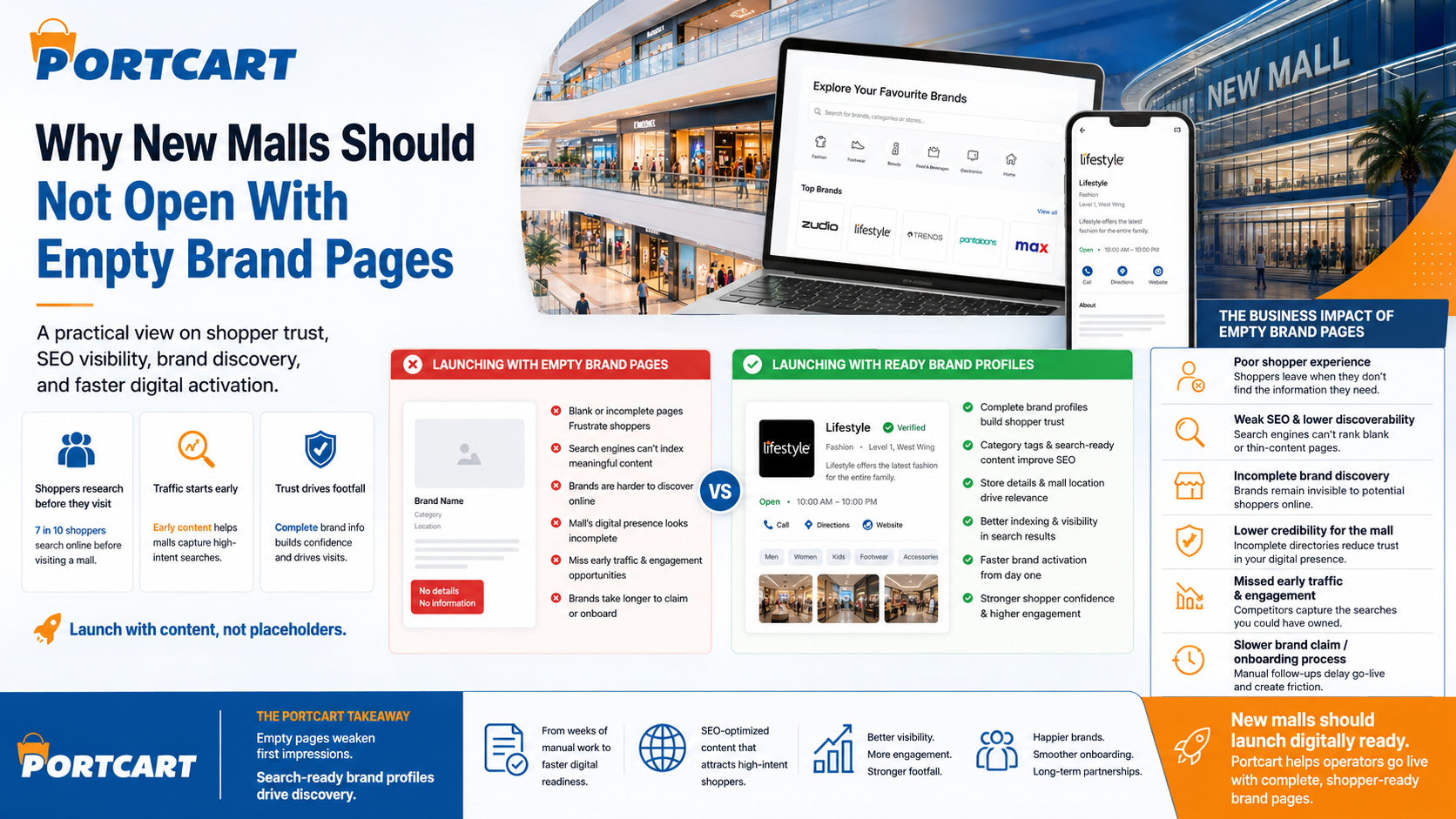
Why New Malls Should Not Open With Empty Brand Pages
New malls should not launch with incomplete brand pages. A structured brand directory improves shopper discovery, tenant visibility, SEO readiness, and mall operations.
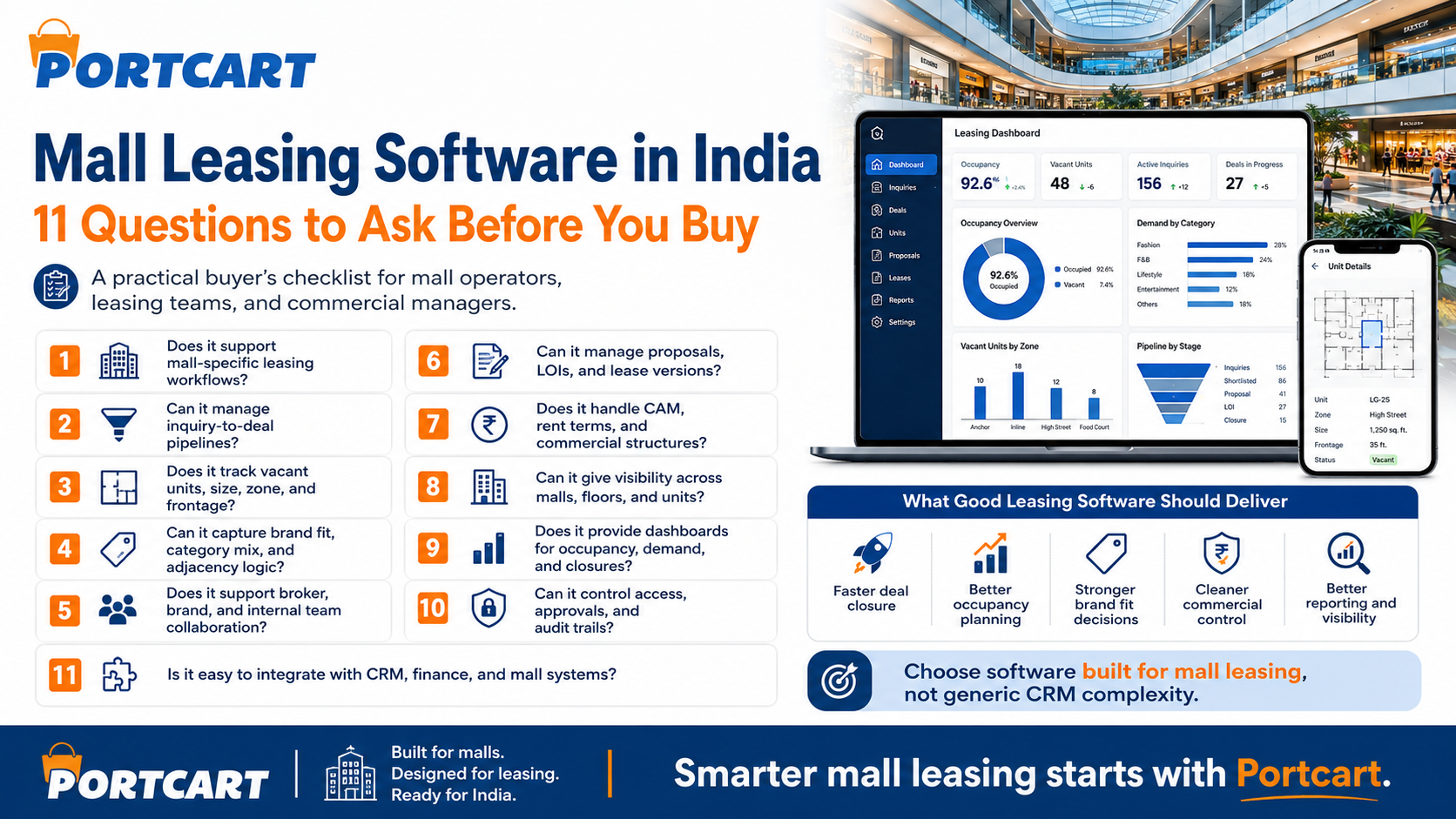
Mall Leasing Software in India: 11 Questions to Ask Before You Buy
The mall leasing software market in India in 2026 is crowded but uneven. Eleven specific buyer questions that separate platforms ready for Indian malls from generic CRMs with a leasing label.
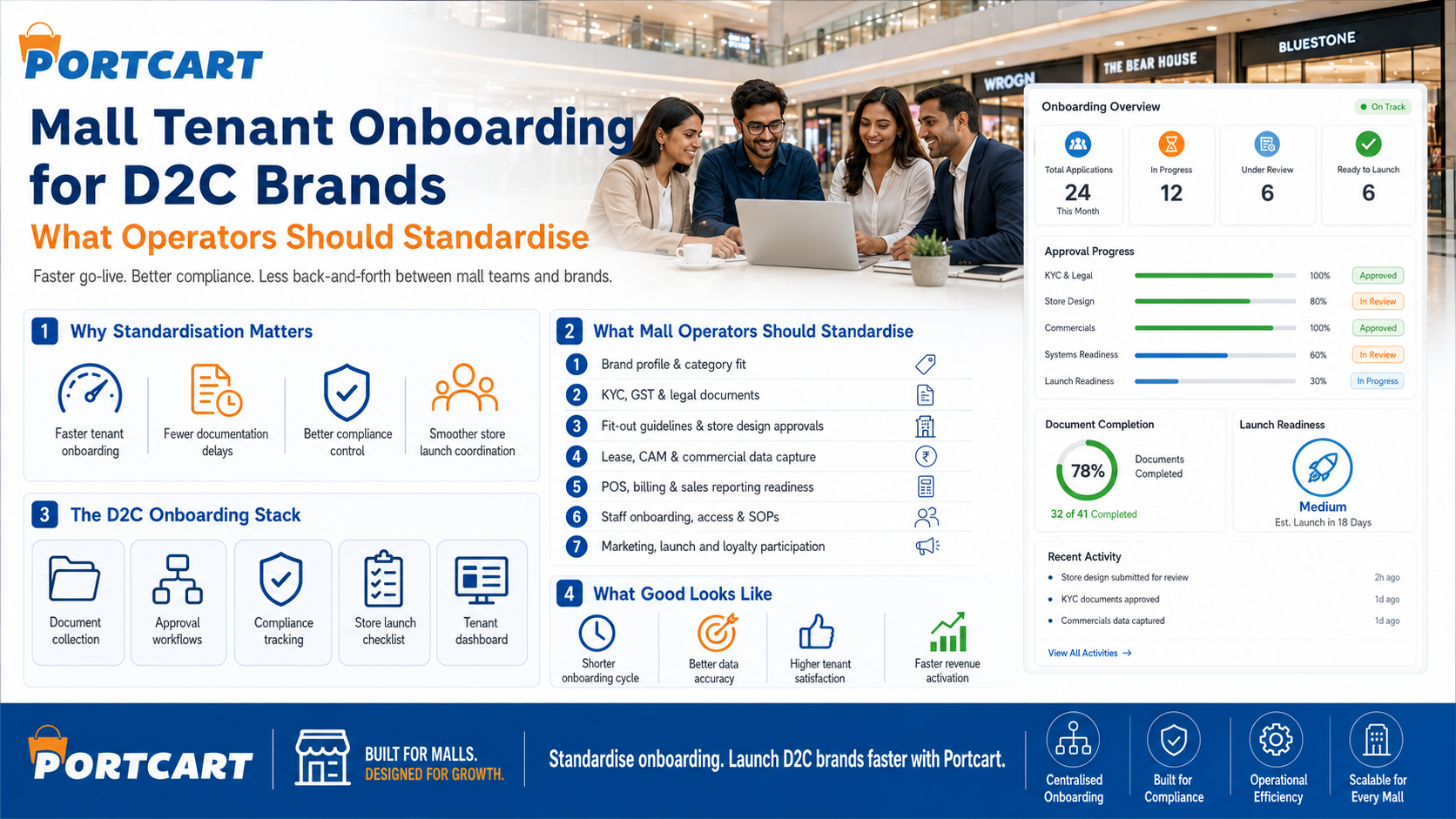
Mall Tenant Onboarding for D2C Brands: What Operators Should Standardise
D2C brands are 27% of new mall leasing per CBRE H2 2025. They need different onboarding than legacy retailers. A standard operating procedure that scales.
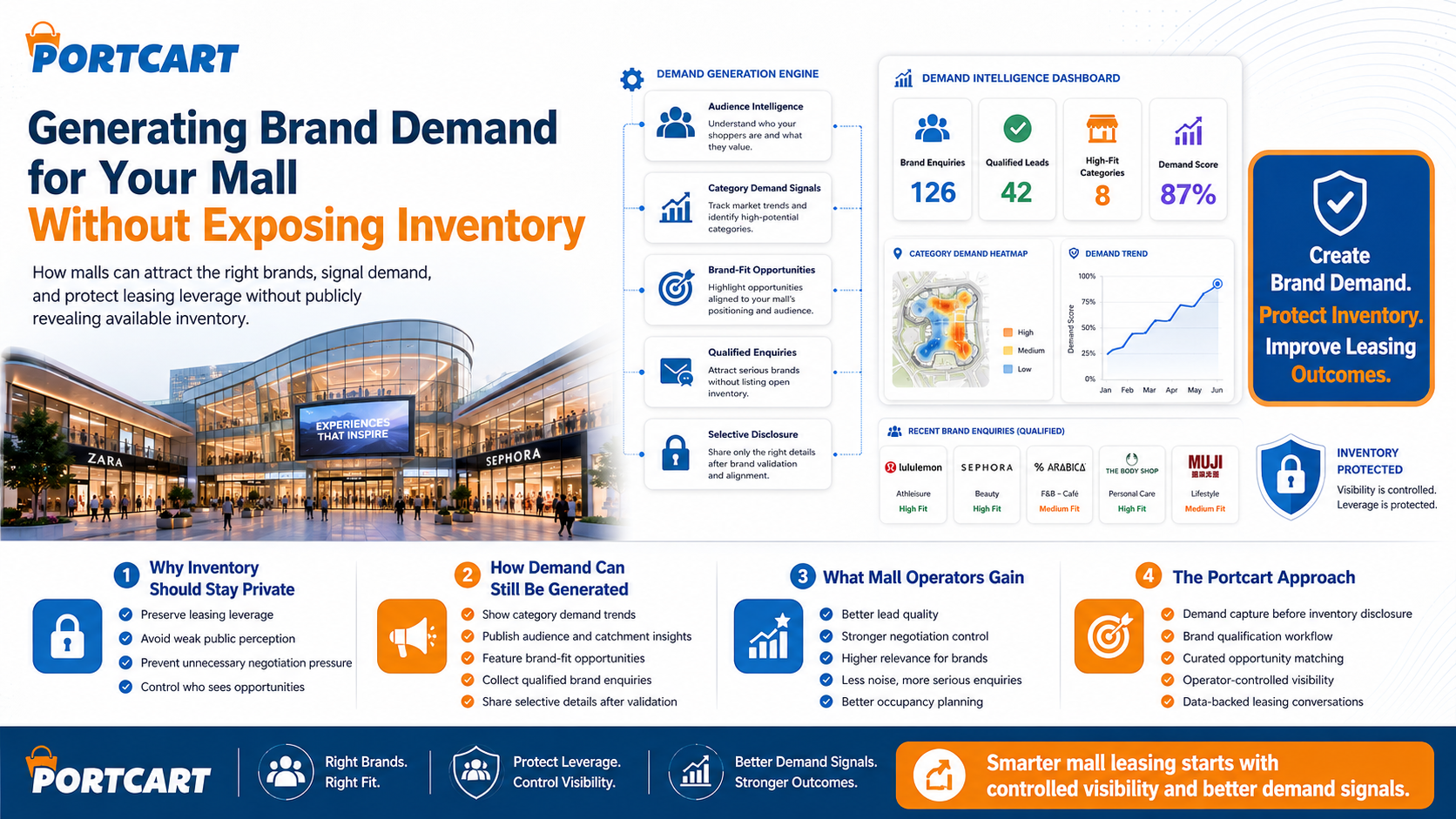
Generating Brand Demand for Your Mall Without Exposing Inventory
Mall leasing teams want brand interest in writing without publishing rental terms or available space publicly. The discreet leasing playbook that works.
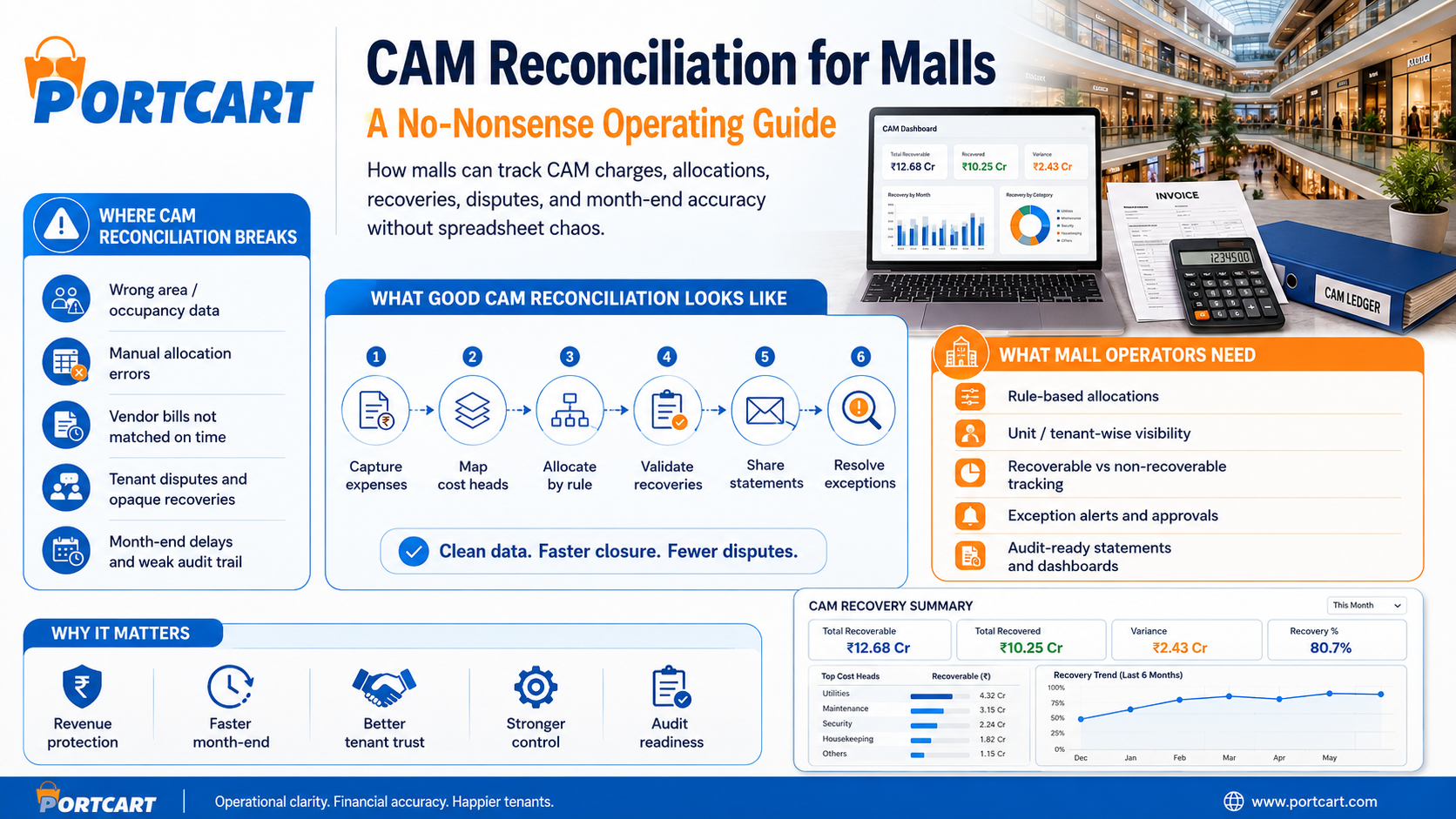
CAM Reconciliation for Malls: A No-Nonsense Operating Guide
Common Area Maintenance reconciliation is one of the noisiest parts of mall finance operations. A clear operating model and a few data discipline rules cut the noise by 80%.