The Invisible Terminal: Why Airport Shops Lose Passengers They Never See
A passenger with 75 minutes after security has money to spend and time to kill, and no idea the store they would have bought from is a two-minute walk away. That is non-aero revenue walking past the shop. Why terminals stay invisible to their own passengers, and what it costs.
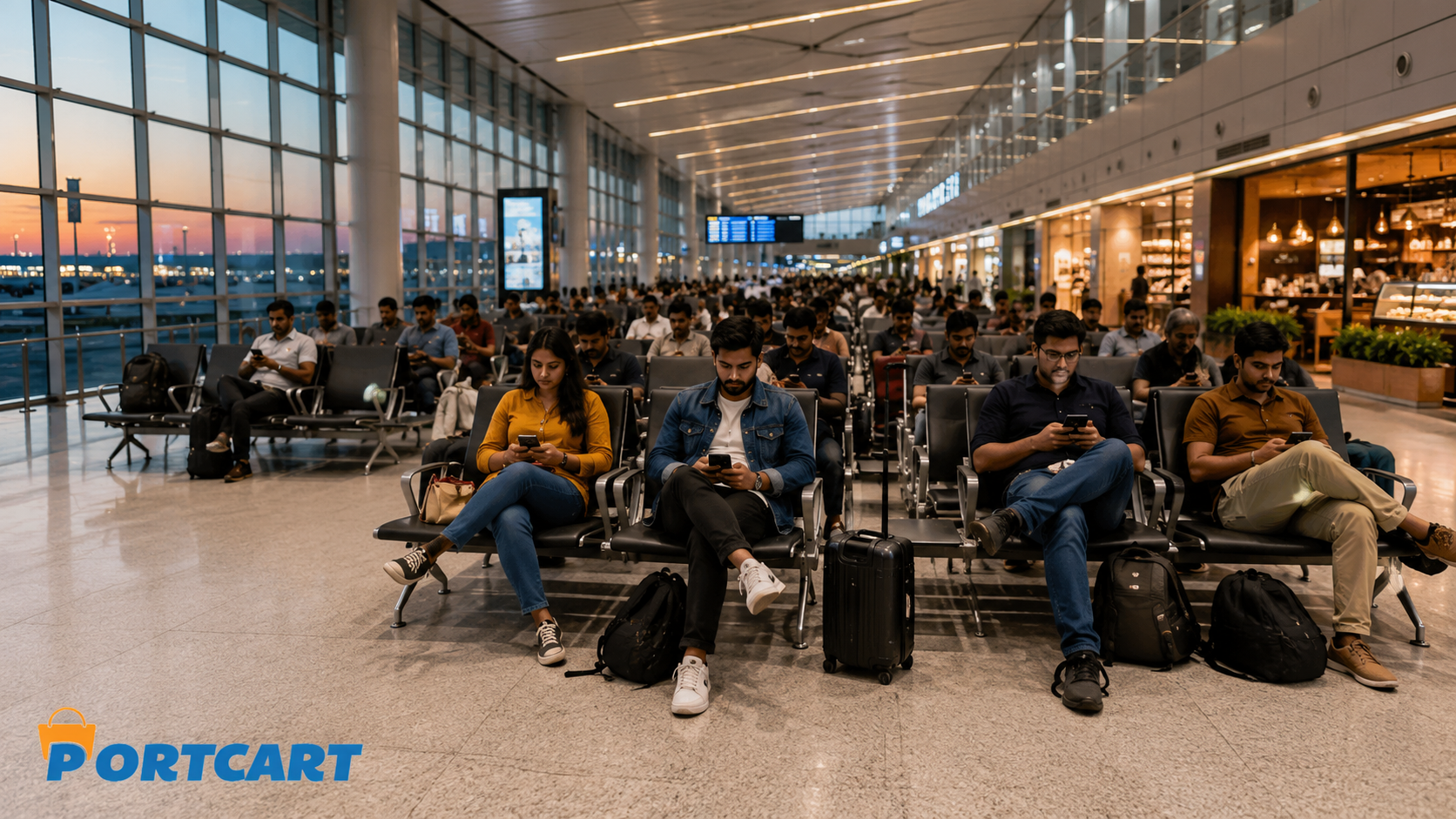
Picture a passenger through security with 75 minutes before boarding. Wallet open, nothing to do, sitting at a gate toward the end of the pier. This is the most valuable retail moment in travel: captive, comfortable, a little bored, money in hand.
They spend it scrolling their phone. Not because they did not want to buy anything, but because they have no idea that the store or the restaurant they would have loved is a two-minute walk away, past a gate they are not sitting near. Nobody told them. Nothing helped them find it.
That is non-aero revenue walking quietly past the shop, and most terminals never see it happen.
Airports invest in the space, then leave the discovery to chance
An airport puts serious capital into its retail and F&B. Premium units, category planning, concession deals, fit-outs. Then, having built it, it relies on the passenger to stumble upon it.
Here is the gap. A terminal's information layer is built for one job: move people to their gate on time. Signage answers "where is my flight" and "where is the exit." It is aviation wayfinding, and it is very good at aviation wayfinding. What it does not do is answer "what is worth my next 60 minutes," which is the retail question. So discovery is left to line-of-sight and luck, at exactly the moment the passenger is most willing to spend.
The villain is a layer built for flights, not for buying
To be clear, this is not a failure of the retail team or the concessionaires. It is a structural gap.
The whole terminal is optimised for passenger flow, which is right. But retail discovery is a different need pointed in a different direction, and nothing owns it. The concessionaire pays for a location and then hopes for footfall and sightline. If their unit is not on the main artery between security and the busy gates, they are effectively invisible, no matter how good they are. The passenger's decision is made by where they happened to sit, not by what they would have chosen.
The anchor duty-free is not the problem. It is unmissable by design. The problem is the specialty store, the genuinely good restaurant near the far pier, and the lounge the passenger never knew they were eligible to enter.
What the invisible terminal costs
The cost is not paid in rent. It is paid in the gap between what the space could earn and what it does.
- Non-aero revenue that lags the footprint. Passenger numbers grow, retail revenue does not keep pace, and the space is blamed rather than the discovery.
- Concession pressure. A concessionaire who cannot be found underperforms, then argues footfall and location at the next negotiation, and the minimum guarantee drifts down.
- The wasted dwell window. The captive, high-intent minutes after security are the best retail conditions travel ever creates. Left to chance, they convert far below what they could.
- No way to explain it. When leadership asks why non-aero revenue is not matching passenger growth, "location" is the answer that ends the conversation without solving anything.
Five signs your terminal is invisible to its own passengers
- A passenger at a far gate cannot easily discover what retail and food is near them or worth the walk.
- Non-aero performance is reported per outlet, never across the passenger journey.
- Your busiest gates and your best outlets are not deliberately connected in any way a passenger experiences.
- Nobody measures pre-security and post-security discovery as separate problems, though they are.
- Concessionaires ask for footfall or discovery data per location that you cannot actually provide.
If most of these are true, the terminal's retail is underused, and the fix is not more space. It is discovery.
What good looks like
A terminal that earns from its retail treats discovery as a job someone owns:
- The passenger can find what is relevant to them, near their gate, in the time they have, before they settle into a seat.
- Discovery is measured, not just sales per square foot: what passengers looked for, and what they could not find.
- The busy gates and the best outlets are connected deliberately, not left to the floor plan.
- Dwell time is treated as the opportunity it is, not as idle minutes between security and boarding.
Where Portcart fits
Portcart is built to help malls and airports understand, influence and measure the shopper journey across discovery, engagement and commercial activity. In a terminal, that is the discovery layer the aviation signage was never meant to be: helping a passenger find the store, the restaurant and the lounge that fit their gate and their time, and letting the commercial team see what passengers looked for. The outcome is the captive dwell window converting closer to what it is actually worth.
The test worth running before the next concessions review
Do not take discovery on faith. Stand at your busiest far gate, give yourself 75 minutes and an appetite, and try to find what is worth walking to. Whatever a passenger experiences there is your real retail discovery, whatever the floor plan says.
If it comes up short, book an Airport Retail Discovery Audit with us. It is a walkthrough of your terminal from the passenger's side: where discovery works, where good outlets are invisible, and what it would take to turn dwell time into non-aero revenue. Bring your non-aero numbers. The gap between them and your passenger growth is usually a discovery gap.