The Errand Left. Your Rent Roll Has Not Noticed.
Operators accepted months ago that quick commerce took the errand trip. Their rent rolls have not. Convenience formats still hold prime positions and favourable terms, and the renewal season after this Diwali will be argued on footfall, which cannot see the trip that left. The trip test, run before the first renewal deck, is how the diagnosis reaches the leases.
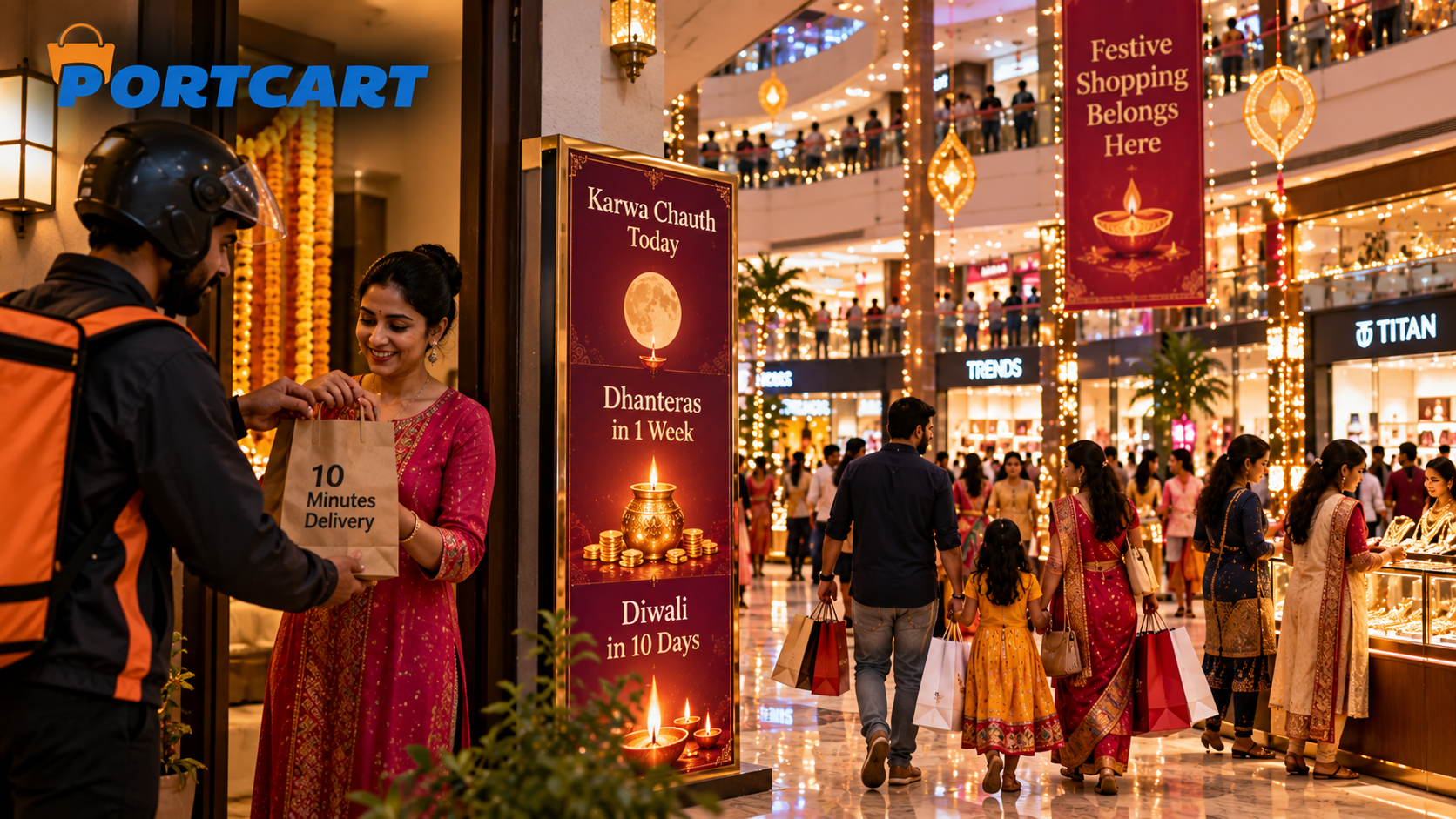
Karwa Chauth is today. Dhanteras is a week away, Diwali ten days. For the first time, the last-minute gift is not a mall visit. The dry fruits for the neighbour, the extra diyas, the sweets you forgot: an app, a rider, ten minutes.
This is not news to most operators. The case that quick commerce took the utility trip and is not giving it back, and that a mall's future is the destination trip, was made on this blog in May, and it is now close to conventional wisdom in the industry. Ask a Centre Director and they will agree with it.
Then look at the rent roll.
A diagnosis that has not reached the leases has not happened
The rent roll is where a mall's beliefs become binding. Positions, terms, renewal dates, marketing contributions: that is where the strategy actually lives, and it changes only at renewal.
Walk the ground floor of a mall whose leadership fully accepts the destination argument and you will still find convenience formats in prime positions, a grocery anchor whose business is heavily top-up, kiosks selling the quick gift, and campaign copy that says "pop in" and "grab". None of that was wrong when it was leased. All of it was leased for a traffic pattern that has since changed, and none of it has come up for renewal since the change.
That is the lag. The distance between what a mall believes and what its leases say is measured in renewal cycles. The next cycle begins in the weeks after Diwali.
How the renewal goes wrong
Here is the conversation that will happen dozens of times this winter.
An errand-dependent tenant comes to renewal with softer sales. The tenant's explanation is the mall: footfall is down, the campaign did not deliver, the position is not what it was. The mall's explanation is footfall too, or the tenant's own execution. Both sides argue from total visits and comparable rents.
Neither names the actual change: the trip that tenant lived on has left the building, and no footfall figure will show it, because footfall counts visits without knowing what kind. So the negotiation ends in one of two wrong places. The mall concedes terms to hold a format whose draw has structurally weakened, or it holds terms on a footfall argument the tenant does not believe, and loses the relationship. Either way the errand mix is locked in for three to five more years.
Diwali week is the evidence, if the mall is watching
The festive week makes the split visible in real time.
The last-minute gift, the one that used to be bought at eight on Dhanteras eve, goes to the app. The chosen gift stays: the jewellery seen on a wrist, the appliance the family stands in front of, the apparel that has to fit, the experience given instead of a thing. Those need comparison, reassurance and company, and nobody chooses a saree from a rider.
Watch which tenants rise this week and which flatten. That pattern, by category, is the most honest renewal evidence a mall will collect all year, and it is usually left in the festive report instead of carried into the leasing decks.
The trip test
Before the first renewal deck is built, go down the rent roll and ask one question of every tenant: would a shopper still come to the mall for this if it could arrive at home in ten minutes?
Yes is a destination tenant. No is an errand tenant. Then overlay three things on the result: who holds the prime positions, who has the most favourable terms, and where the marketing money goes.
Most malls have never done this, and the result is usually uncomfortable. The roll leans toward the trip that has left.
Four questions before the first renewal deck
- Which renewals due this cycle are errand formats, and what have their sales done across the last two festive seasons?
- For each of those, is the negotiation built on footfall and comparables, or on what happened to the trip?
- Does the mall report any metric that distinguishes a twelve-minute visit from a three-hour one?
- Which destination categories are currently in the wrong positions, and which errand renewals would free the right ones?
If all four have answers, the roll is being managed by trip type and this article owes you nothing. If the third question has no answer, the other three cannot be answered on evidence, and this winter's renewals will be argued from the wrong numbers.
What a re-sorted rent roll looks like
- The roll is sorted by trip type before renewal season, not after it.
- Errand formats stay, as service to the destination trip, on terms and in positions that reflect their changed draw. A pharmacy still belongs in the mall. It does not belong in the position that a destination category would fill.
- Destination categories move into position and into the marketing, and the campaign sells the visit, not the item.
- Destination visits are measured separately from drop-ins: dwell, multi-store, F&B pairing, shoppers who came for a reason and found it.
- Diwali week's category results are carried into the renewal decks as evidence, on both sides of the table.
None of this requires breaking a lease. It requires deciding what the roll should look like before the leases come up, rather than discovering it renewal by renewal.
Where Portcart fits
Portcart is built to give malls one view of the shopper journey: discovery, engagement and commercial activity in a single measurable line. For leasing that means the destination reasons to visit are surfaced and the ones that convert are visible, so a rent roll can be re-sorted on evidence rather than on a footfall total that cannot see the trip that left.
The meeting worth having
Before the first renewal deck of the season, run the trip test on the rent roll in the leasing review, with the asset manager in the room.
If the result leans the wrong way, book a Tenant Mix Destination Review with us. It is a working session that sorts the roll by trip type, shows where positions, terms and marketing are weighted against the trip the mall can win, and sets up the measurement that separates a destination visit from a drop-in before renewals are argued. Bring the rent roll with renewal dates and last Diwali's sales by category. The line between the two trips is already in those documents. This cycle is when it has to be drawn.