Experiential Retail in India: Why 40 Percent of Mall Space Is Going Non-Retail
CBRE H2 2025 reported up to 40 percent of new mall space being allocated to non-retail experiences. Kids zones, gaming, gym, wellness, F&B, entertainment. A breakdown of what is growing, what is fading, and how to plan tenant mix around it.
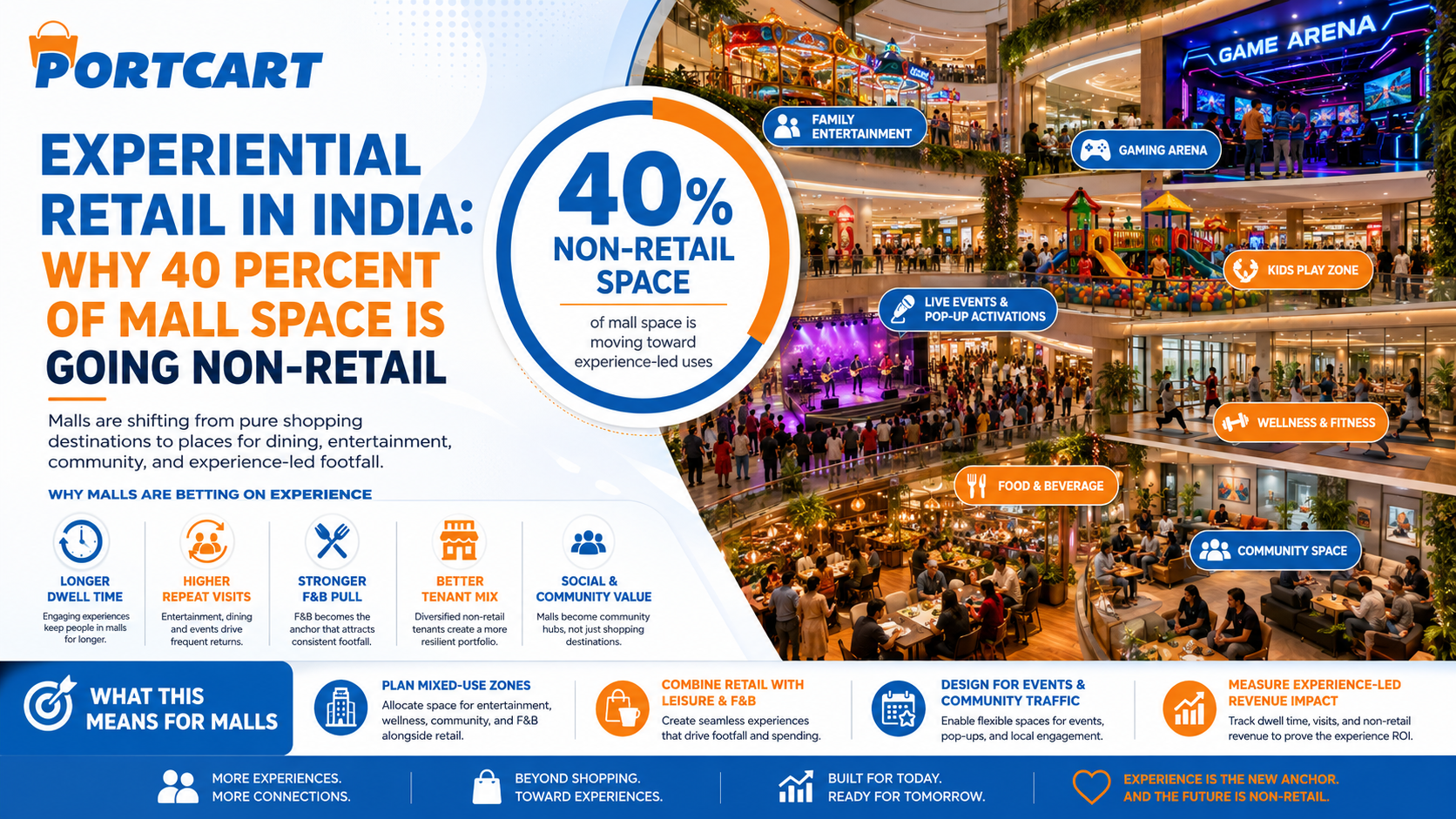
CBRE India's H2 2025 retail report buried one of the most consequential numbers for Indian mall planning in a paragraph about tenant mix: up to 40 percent of new mall space is now being allocated to non-retail experiences. F&B, kids zones, gaming arcades, indoor sports, gym chains, wellness clinics, beauty services, IP-branded activations. For decades, malls were primarily retail with a small experiential top-up. By 2026, the formula has inverted. The malls being built and re-mixed in 2026-2028 are increasingly experiential venues that happen to have shops.
For decades, malls were primarily retail with a small experiential top-up. By 2026, the formula has inverted. The malls being built and re-mixed in 2026-2028 are increasingly experiential venues that happen to have shops.
This piece breaks down what's actually growing, what's fading, and how to plan tenant mix for the new normal.
The seven experiential categories actually growing
1. Indoor entertainment (gaming, VR, arcade)
Smaaash and Timezone have been around for years. What's new is the format and scale. Premium indoor entertainment centres now anchor 25,000 to 60,000 sq ft, host birthday parties at ₹3,000 to ₹8,000 per child, and generate revenue per sq ft that rivals anchor retail. Family-with-kids dwell time at malls with strong entertainment anchors is 25 to 40 percent higher than malls without.
2. Trampoline parks and indoor sports
SkyJumper, JustJump, Bounce Town in trampoline. Padel courts (the fastest-growing sport in metro India in 2025-26) are landing in malls in Bengaluru, Mumbai, and Delhi. Box cricket and futsal centres in larger Tier-1 malls. These work as upper-floor anchors that draw young adult traffic during off-peak hours.
3. Wellness and medi-spa
Skin clinics (Kaya, VLCC, Olivia, Pristyn Care), dental chains (Clove Dental), eye care (Vision Express, Lenskart), physiotherapy. These convert mall foot traffic into appointment-based revenue, generally with appointment booking integrated to the mall app or partner platforms.
4. Premium gym chains
Cult.fit Centres, Anytime Fitness, Gold's Gym. The premium gym in a metro mall does 1,500 to 4,000 active members at ₹1,500 to ₹4,000 per month. Substantial recurring revenue plus footfall driver. Most malls are still under-allocated to gym space.
5. Kids edutainment and play zones
Funcity, Cocoon, KidZania-format experiential learning. Birthday party economics drive a meaningful share of revenue. Critical for the family segment that mall operators most want to retain.
6. IP-licensed activations
Marvel, Disney, DC, regional cricket teams, Bollywood star meet-and-greets. Temporary (2-12 week) installations that command premium ticket prices and drive massive footfall spikes. Most malls treat these as marketing events; the operators pulling ahead treat them as a permanent calendar with dedicated event space.
7. Beauty service formats
Nykaa Luxe, Sephora, Hair and Care premium chains, men's grooming concepts. These are technically retail but operate increasingly as service-led with treatment rooms, brand classes, and consultation appointments.
What's fading
Three categories that look stable but are quietly losing share:
- Hypermarkets and supermarkets. Reliance Smart, More Supermarket, Spencer's. Lost the everyday-grocery trip to quick commerce. Most malls are reducing this footprint over the next renewal cycle.
- Multiplex extensions. PVR, INOX. Existing footprint stable but new mall builds increasingly drop the 8-screen multiplex in favour of a 4-screen format plus other entertainment.
- Traditional QSR (Quick Service Restaurant). McDonald's, KFC, Burger King. Renewing existing footprints but not expanding aggressively. Premium casual dining is taking their growth share.
The 40-percent benchmark, decoded
CBRE's 40 percent includes everything that's not traditional shop retail. Roughly:
- F&B: 18-22% of mall area in 2026 (up from 12-15% in 2020)
- Entertainment + gaming: 6-9% (up from 3-5%)
- Wellness + beauty service: 4-6% (up from 2-3%)
- Kids edutainment: 3-5% (up from 1-2%)
- Premium gym: 2-3% (new category for most malls)
- Events / IP space: 1-2% (most malls have zero dedicated; this should change)
Total experiential: 34-47% depending on mall positioning. Pure shop retail: 53-66%. The remaining 0-5% is services like banks, ATMs, salons, repair.
How to plan tenant mix for the new normal
Three planning principles that work in 2026:
Principle 1, Anchor your mall on an experiential lead, not a retail anchor. A 5 lakh sq ft mall in 2026 should have its primary "we're going to the mall for X" reason be experiential. Could be the premium entertainment centre, the trampoline park, the gym, the IP activation calendar. Retail follows, doesn't lead.
Principle 2, Plan dwell-time deliberately. Experiential retail compounds when shoppers stay 2.5+ hours. F&B, entertainment, beauty service, and shop retail all benefit from longer dwell. Plan the mall flow so a family can naturally spend 3-4 hours without feeling stuck. Wayfinding, restroom density, stroller paths, waiting areas, all matter.
Principle 3, Treat events as a permanent operating function. Not as marketing overflow. Hire a dedicated events lead. Build a 12-month programming calendar. Have dedicated event space (atrium plus 1-2 secondary spaces) rather than ad-hoc setup-and-teardown. Build the ticketing infrastructure once, use it 50+ times a year.
The mall types this works for
Not every mall format benefits equally:
- Metro Tier-1 malls (5+ lakh sq ft): full experiential transformation works
- Tier-2 mid-sized malls (3-5 lakh sq ft): selective experiential (F&B + kids + one anchor entertainment), keep retail dominant
- Tier-3 destination malls (under 3 lakh sq ft): mostly retail, F&B as primary experience, skip the rest
- Lifestyle plazas (under 2 lakh sq ft): F&B + specialty service heavy, almost no traditional shop retail
Mismatch happens when operators try to copy the metro template into a smaller mall. The fixed costs of a trampoline park or premium gym don't scale down.
Frequently asked questions
Does experiential retail have lower revenue per sq ft than retail?
Highly variable. Premium gaming and trampoline can match or exceed anchor retail revenue per sq ft. Quiet wellness clinics can be lower. Average across all experiential is roughly 80-95% of anchor retail per sq ft, but the footfall multiplier on adjacent retail is 1.4-1.8x, so the all-in mall economics improve.
How long does experiential re-mix take?
3-5 years for a meaningful shift if aggressive on renewals. 7-10 years if passive. Most malls are passive.
What's the right MG-vs-revenue-share structure for entertainment anchors?
Lower MG, higher revenue share works better than the retail standard. Entertainment is more seasonal and event-driven. Aligned-risk structure earns better tenants.
How Portcart handles this
The experiential-mall operating stack requires the same modules as retail-mall, plus stronger emphasis on events and shopper engagement.
- [Events and Ticketing](/modules): purpose-built for the permanent event function, with ticket variants, check-in flows, sponsor reporting, and post-event analytics that feed back into mall planning.
- [Loyalty Layer](/modules): earns points across experiential spend (gym membership renewals, entertainment ticket purchases, gaming arcade reloads) so the loyalty programme reflects the full mall experience.
- [amenity and services mapping](/modules): first-class entries for wellness clinics, gyms, salons, ticket counters so they're discoverable and bookable.
- [Communication Engine](/modules): campaign messaging for upcoming events, gym membership offers, kids workshop signups, IP activation announcements.
If your mall's experiential transformation is on the 2026-28 roadmap, request a demo and we'll walk through how Portcart customers are building the experiential operating layer.